Percale vs Sateen Hotel Sheets: Which Weave Wins
Percale vs sateen for hotel sheets: compare hand-feel, breathability, durability, and laundry performance to pick the right weave for your property.
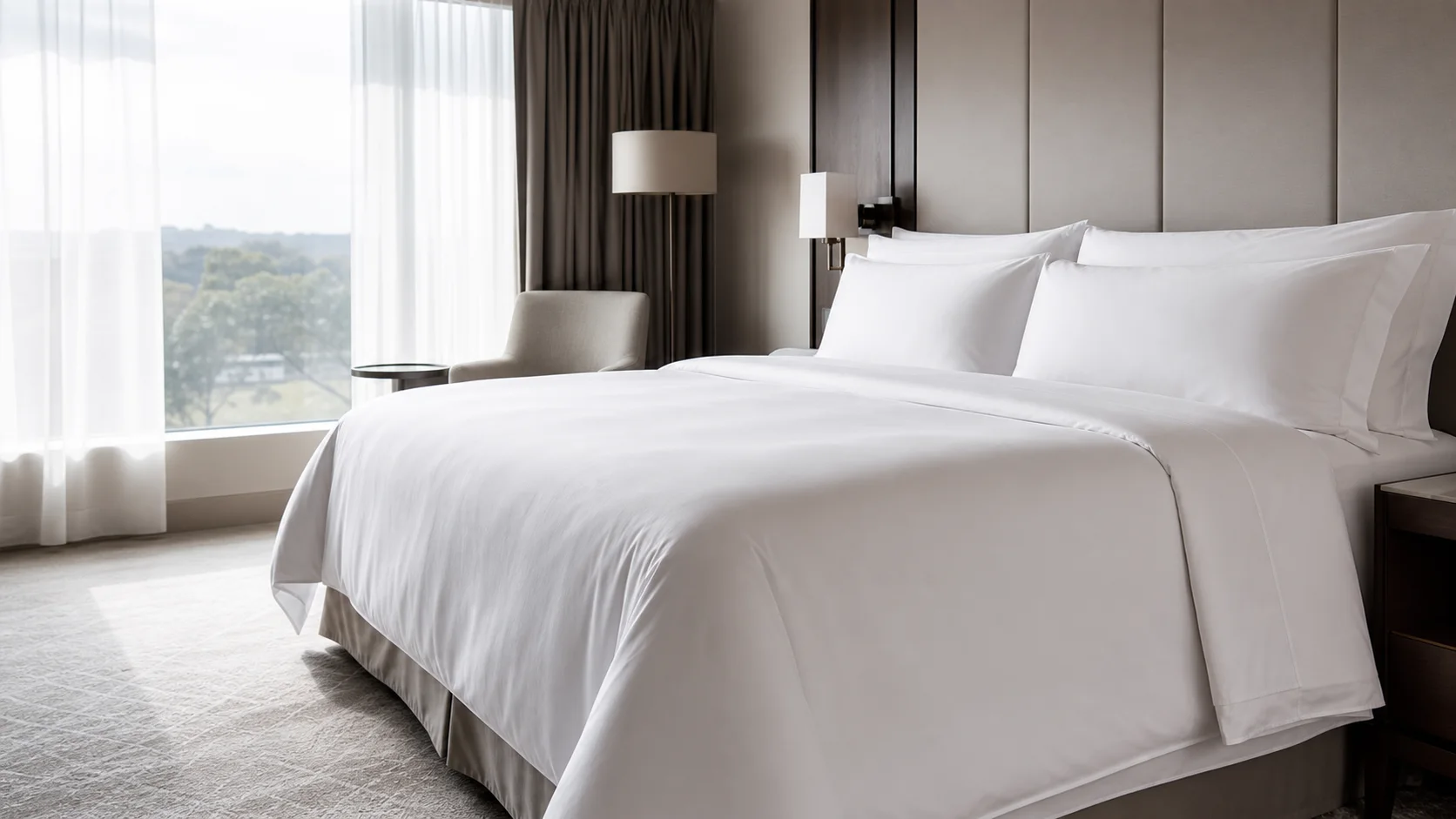
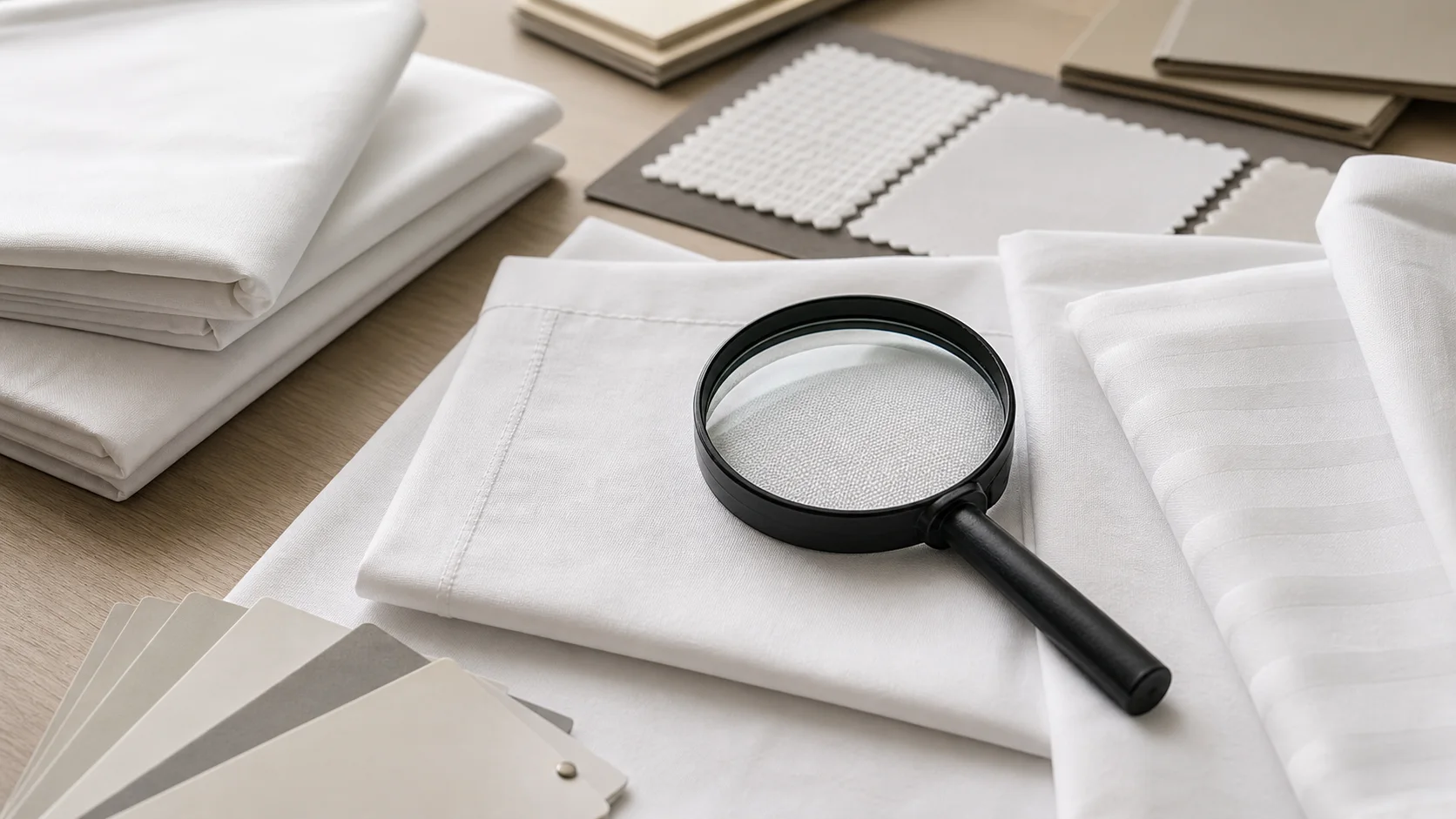
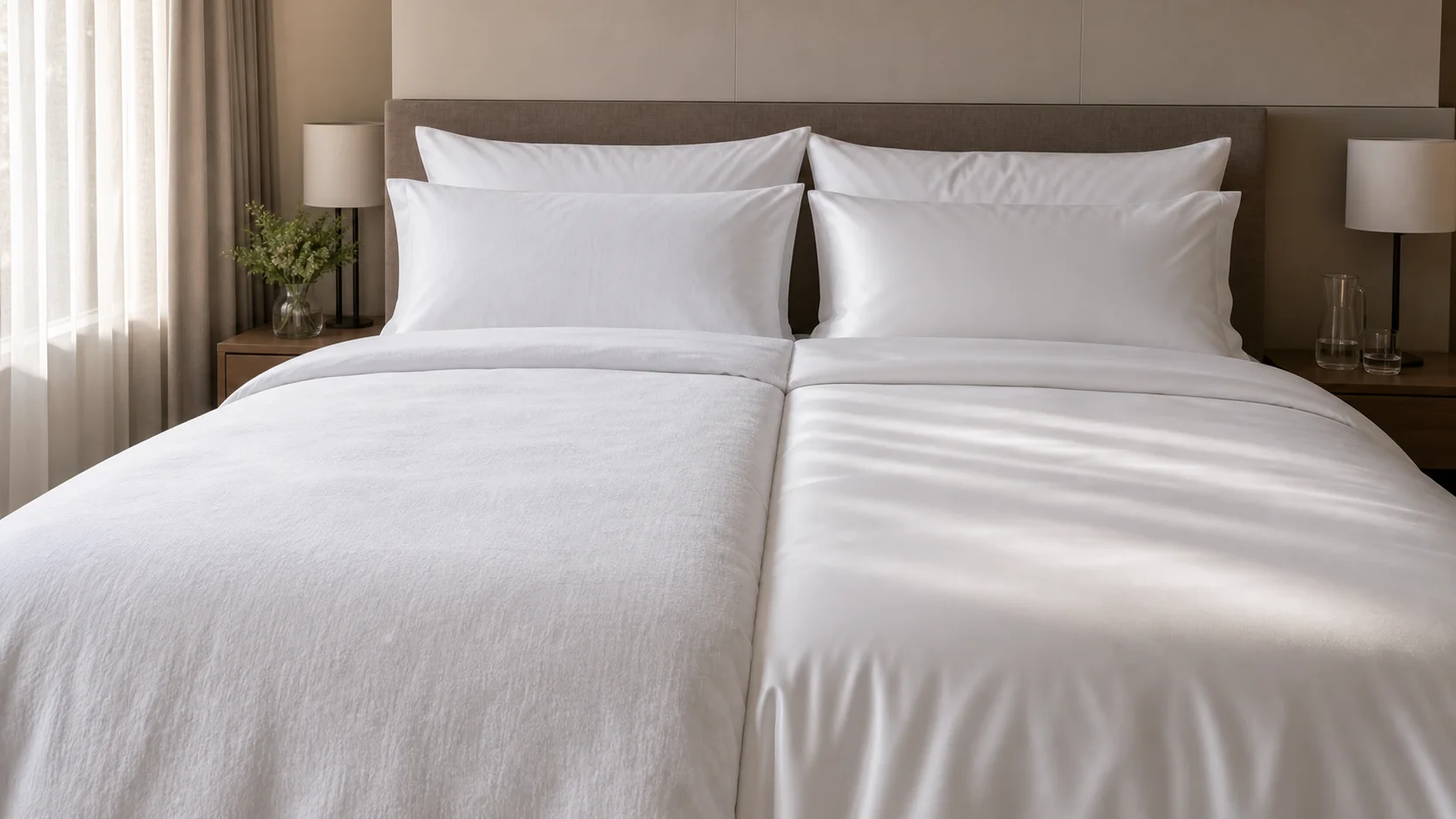
Materials and operations, shown together.
Product detail and back-of-house context help connect each specification choice to how the item looks, launders, stores, or survives service.
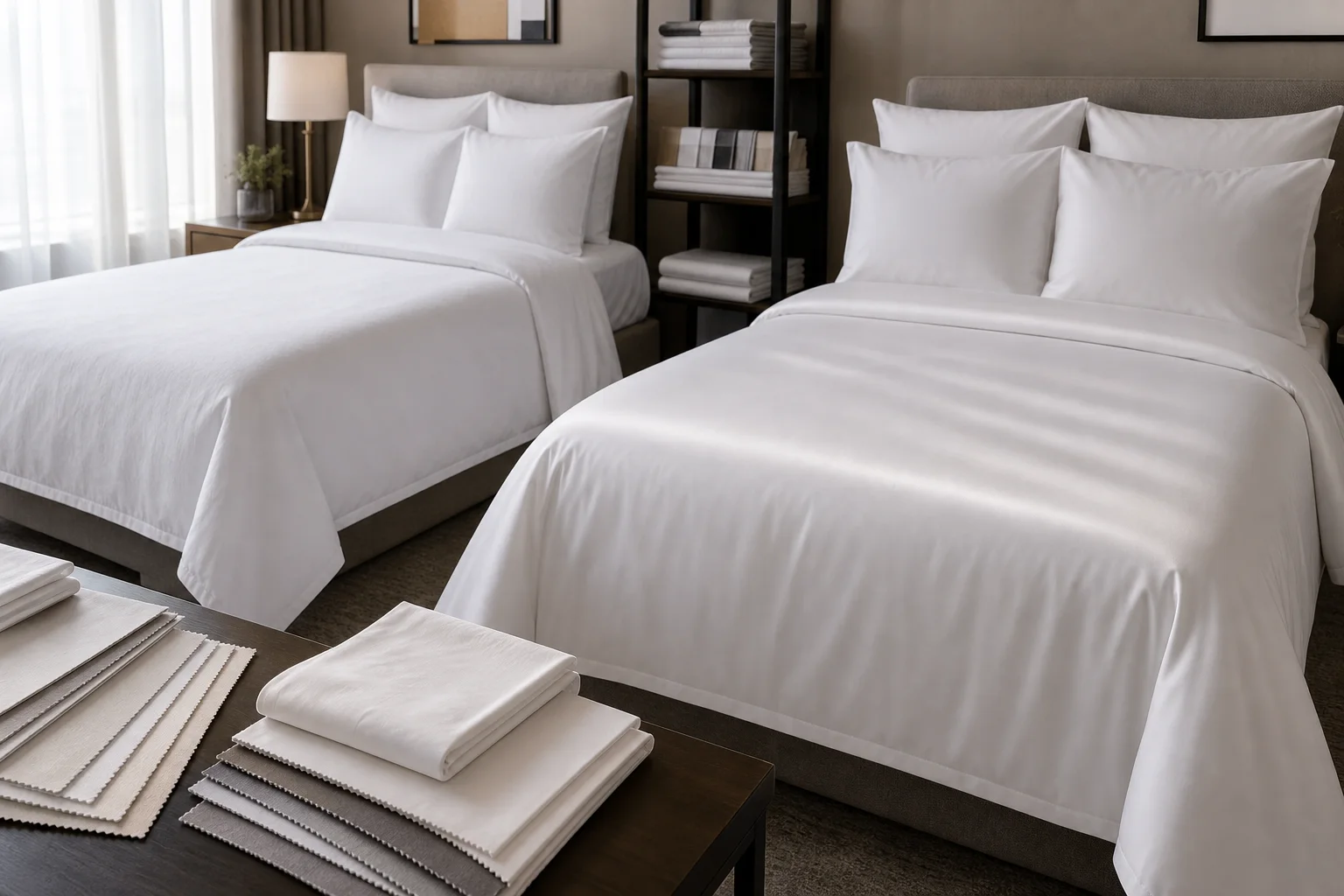
Percale vs Sateen Hotel Sheets: Which Weave Is Right for Your Property
Most buyers open the sheet conversation with thread count and cotton type. Fair enough, but the decision that really shapes how a bed feels, looks, and holds up over hundreds of wash cycles is the weave. Percale and sateen dominate hospitality bedding, and they behave nothing alike on the bed or in the laundry.
This guide walks through the percale vs sateen question the way a buyer actually faces it: how each weave is built, how that structure drives performance, and which one fits your property type, climate, and laundering setup. By the end you’ll be able to spec it without second-guessing yourself.
Key Takeaways
- Percale is a tight 1-over-1 plain weave: crisp, cool, matte, and breathable. It excels in warm climates, high-turnover properties, and crisp-luxury positioning.
- Sateen is a warp-faced 4-over-1 weave: silky, lustrous, drapey, and warmer. It suits cooler climates, premium suites, and upscale boutique feel.
- Percale generally wins on durability and pilling resistance under heavy commercial laundering; sateen wins on softness and visual richness but needs gentler care.
- Weave matters more than headline thread count. Pair this decision with realistic thread-count expectations (see the thread-count guide).
- Many properties run both: percale for standard rooms and warm-climate sites, sateen for suites and signature bedding.
What the Weave Actually Is
The weave is the pattern in which warp (lengthwise) and weft (crosswise) yarns interlace. That pattern is the root cause of nearly every difference you’ll feel on the bed.
Percale: the plain weave
Percale is a simple one-over, one-under plain weave. Each weft yarn passes over one warp yarn, then under the next, like a basket. To count as percale, the fabric is a tightly woven plain weave with a balanced thread count, usually around 180 and up.
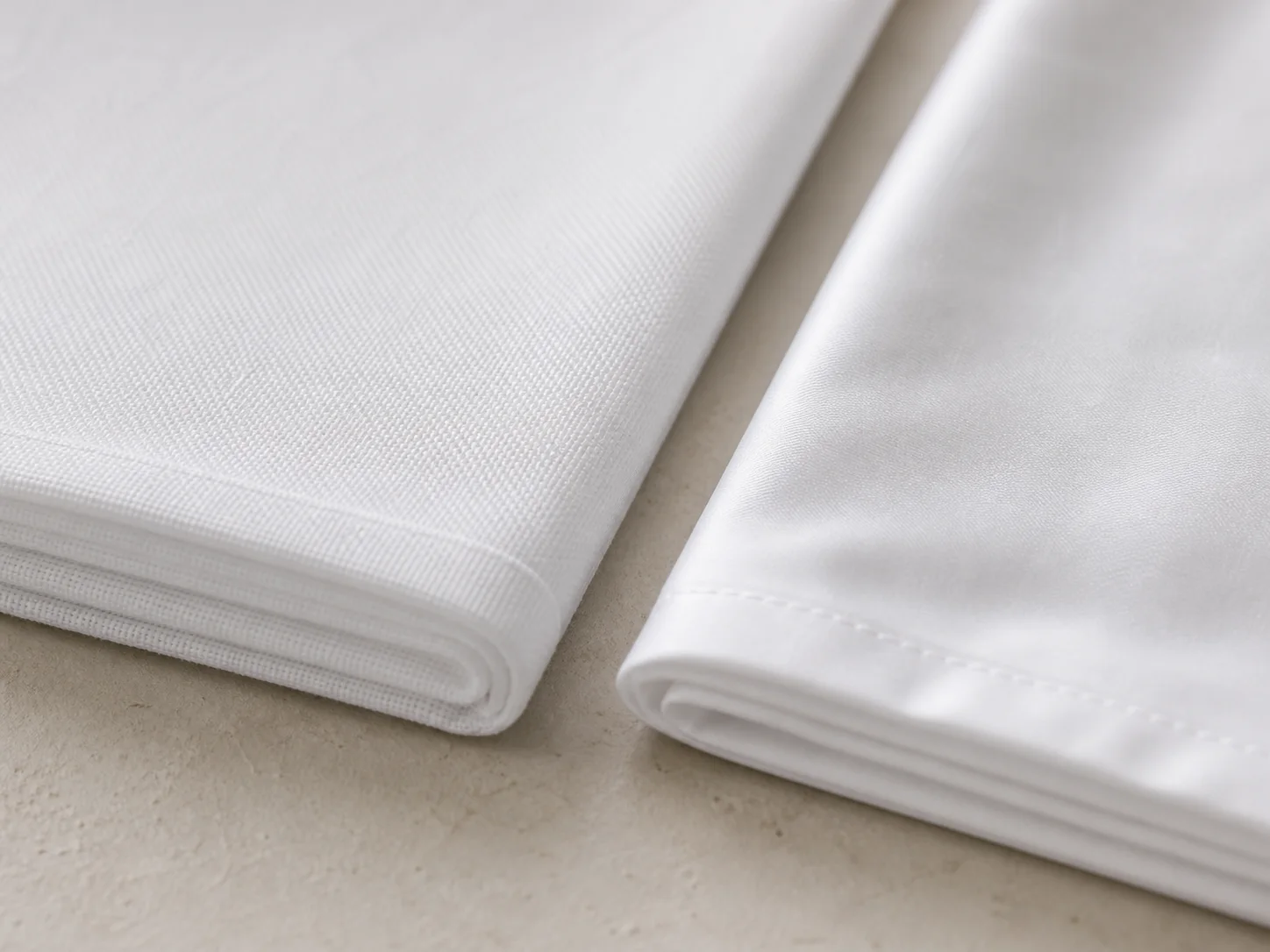
That tight, balanced interlacing gives you a matte, even surface and that crisp hand-feel. It’s the cool, fresh sheet you remember from a good luxury hotel. The dense grid of interlacings is also what makes percale structurally stable and abrasion-resistant.
Sateen: the warp-faced weave
Sateen uses a four-over, one-under (or similar) warp-faced weave, where each warp yarn “floats” over several weft yarns before tucking under one. Those long surface floats are what make sateen feel silky and catch the light, giving it a soft sheen and a heavier, more fluid drape.
Here’s the catch. Those floats sit exposed on the surface, so they snag, abrade, and pill more easily than the locked-in yarns of percale. Sateen feels more luxurious, but it’s mechanically less rugged.
Note on fiber: weave and fiber are separate decisions. Both percale and sateen can be woven from long-staple cotton, cotton-poly blends, or other fibers. We won’t re-cover cotton grades here; the bed linen selection guide handles that.
How Each Weave Performs
Hand-feel and appearance
- Percale: crisp, cool, smooth but matte. A clean, hotel-fresh sensation. Looks understated and tailored.
- Sateen: silky, soft, with a subtle luster. Looks richer and more “boutique.” It photographs beautifully for marketing imagery and suite styling.
Breathability and temperature
Percale’s open, balanced plain weave breathes well and sheds heat, which is why it reads as cool and fresh. That makes it the obvious pick for warm, humid destinations and guests who sleep hot. Sateen’s denser float structure traps a bit more warmth and feels cozier, which helps in cooler climates or winter seasons but works against you in the tropics.
Durability and pilling
This is where percale earns its reputation in hospitality. The 1-over-1 interlacing locks the yarns in place, so percale shrugs off abrasion and pilling and survives aggressive commercial laundering better than sateen. Sateen’s surface floats are exposed, so over many cycles they can pill or wear into a dull patch wherever abrasion concentrates. Quality long-staple sateen softens that problem, but it doesn’t erase it. The structural disadvantage is real.
Wrinkle behavior and ironing
Percale wrinkles more readily and wants ironing or flatwork finishing to deliver that signature crisp presentation. For an in-house laundry, that’s real labor to budget for. Sateen’s drape hides wrinkles, so it often looks acceptable with less pressing, which trims your finishing time.
Weight and drape
Sateen runs heavier and falls in soft folds, which gives you that plush, layered bed look. Percale is lighter and lies flatter and more tailored. Neither one is “better.” It’s a styling choice, and it should match how your brand dresses a bed.
Commercial-laundry performance over hundreds of cycles
Hotel linen lives or dies in the laundry. Percale’s structure tolerates high temperatures, hard agitation, and frequent washing with less surface degradation, which makes it the safer bet for properties running demanding in-house or third-party laundries. Sateen holds up well too, but it rewards gentler cycles, moderate temperatures, and less mechanical action. Match the weave to the process your laundry actually runs, not the one on the spec sheet.
Percale vs Sateen: Side-by-Side Comparison
| Attribute | Percale | Sateen |
|---|---|---|
| Weave structure | Plain weave, 1-over-1 | Warp-faced, ~4-over-1 |
| Hand-feel | Crisp, cool, matte | Silky, soft, smooth |
| Appearance | Understated, tailored, matte | Lustrous, rich, subtle sheen |
| Breathability | High, sleeps cool | Moderate, sleeps warmer |
| Durability / pilling resistance | Excellent | Good (floats more exposed) |
| Wrinkle behavior | Wrinkles more; benefits from ironing | Drapes smoother; hides wrinkles |
| Weight & drape | Lighter, flatter, tailored | Heavier, fluid drape |
| Commercial-laundry tolerance | Very robust; handles heavy cycles | Good; prefers gentler cycles |
| Best-fit positioning | Warm climates, crisp luxury, high turnover | Cooler climates, premium suites, boutique feel |
Mapping Weave to Property Type and Climate
Choose percale if…
- Your property is in a warm, humid, or tropical climate and guest comfort depends on a cool, breathable sheet.
- You run a high-occupancy, high-turnover operation where sheets face heavy, frequent laundering.
- Your brand identity is crisp, clean, classic luxury, the tailored, hotel-fresh aesthetic.
- You want the lowest lifetime cost per cycle and maximum durability from your par stock.
- You operate a robust in-house laundry that can handle flatwork ironing for that crisp finish.
Choose sateen if…
- You’re outfitting premium suites, signature rooms, or an upscale boutique where a plush, silky feel elevates the guest experience.
- Your property sits in a cooler climate or has strong seasonal winters where a warmer, cozier sheet is welcome.
- You want bedding that photographs richly and supports a luxurious, layered bed presentation.
- Your laundry can commit to gentler cycles and moderate temperatures to protect the weave.
Run both (a common pro move)
Plenty of groups standardize on percale for standard rooms and warm-climate properties, then reserve sateen for suites and flagship locations. You get durability and cost control at scale, plus a premium tier where it counts. Just keep your par-stock planning and SKU management tidy so housekeeping and laundry don’t mix incompatible care routines. The par-stock guide covers how to structure that.
A Quick Word on Thread Count
Buyers often assume a higher thread count automatically means a better sheet. It doesn’t, and weave is part of the reason. Sateen constructions can carry higher nominal thread counts because of how the floats pack in, while a well-made percale at a moderate count will outperform a flimsy high-count sheet every time. Yarn quality, ply, and weave integrity matter far more than the number on the package. For the full breakdown of what thread count does and doesn’t tell you, see the thread-count myths guide instead of fixating on the figure here.
Care Differences That Affect Lifetime Value
- Temperature: Percale tolerates higher wash and dry temperatures; sateen prefers moderate heat to protect its floats and sheen.
- Mechanical action: Percale handles heavier agitation; sateen lasts longer with gentler cycles and reduced over-drying.
- Finishing: Budget for ironing or flatwork on percale to deliver crispness; sateen often needs less pressing.
- Chemistry: Both benefit from correct dosing and pH-balanced wash formulas; over-bleaching and over-drying shorten the life of either weave.
- Rotation: Rotate stock evenly so no single set absorbs disproportionate wear, regardless of weave.
Matching your laundry process to the weave is the single biggest lever on how many cycles you get before replacement, and therefore on your true cost per night.
Frequently Asked Questions
Is percale or sateen better for hotels? Neither is universally better. Percale suits warm climates, high-turnover laundering, and crisp-luxury branding; sateen suits cooler climates, premium suites, and a silky, plush feel. The right answer depends on your climate, positioning, and laundry capability.
Which is more durable, percale or sateen? Percale is generally more durable and more pilling-resistant because its tight 1-over-1 weave locks the yarns in place. Sateen’s surface floats are more exposed to abrasion, so it benefits from gentler laundering to reach a comparable lifespan.
Does percale or sateen sleep cooler? Percale sleeps cooler. Its open, balanced plain weave breathes and sheds heat, making it the better pick for warm, humid destinations and guests who sleep hot. Sateen traps slightly more warmth.
Why does sateen feel softer and shinier? Sateen’s warp-faced weave floats yarns over several threads before tucking under, creating a smooth surface that reflects light. That’s what produces the silky hand-feel and subtle sheen, and it’s also what makes the fabric slightly more delicate.
Does sateen always have a higher thread count than percale? Often, but it’s not a reliable quality signal. The weave structure lets sateen pack a higher nominal count, yet yarn quality and construction matter far more than the number. Don’t choose a weave based on thread count alone.
Can one property use both percale and sateen? Yes, and many do: percale for standard and warm-climate rooms, sateen for suites and signature bedding. Keep care routines and par stock organized so the two weaves don’t get mixed in incompatible laundry cycles.
Internal Links
Still weighing weaves for your next linen order? A knowledgeable hospitality textile supplier can send you percale and sateen fabric samples to feel the difference firsthand and help you match each weave to your climate, brand, and laundry setup. Reach out to request samples, a product catalog, or a custom quote tailored to your property.