Hotel Bed Sheet Sizes: US & European Standards Explained
Complete hotel sheet size chart: US fitted and flat sheet dimensions with pocket depths, European metric bed sizes, and how hotels color-code sizes for laundry.
Materials and operations, shown together.
Product detail and back-of-house context help connect each specification choice to how the item looks, launders, stores, or survives service.
Hotel Bed Sheet Sizes: US & European Standards Explained
Order the wrong sheet size and nothing else about the linen matters. Too small and fitted corners tear at the elastic within weeks; too large and beds look unmade minutes after housekeeping leaves. Yet “queen sheets” means different dimensions depending on the market, the mattress build, and whether the spec sheet was written in inches or centimeters.
This guide lays out the sizes hotels actually order in the US and European systems, the pocket-depth question that causes most sizing mistakes, and the color-coding convention that keeps laundry rooms running.
Key takeaways
- US hotel sheets are sized in inches around named beds (Full, Queen, King); European sheets are sized in centimeters around mattress widths (140, 160, 180, 200 cm).
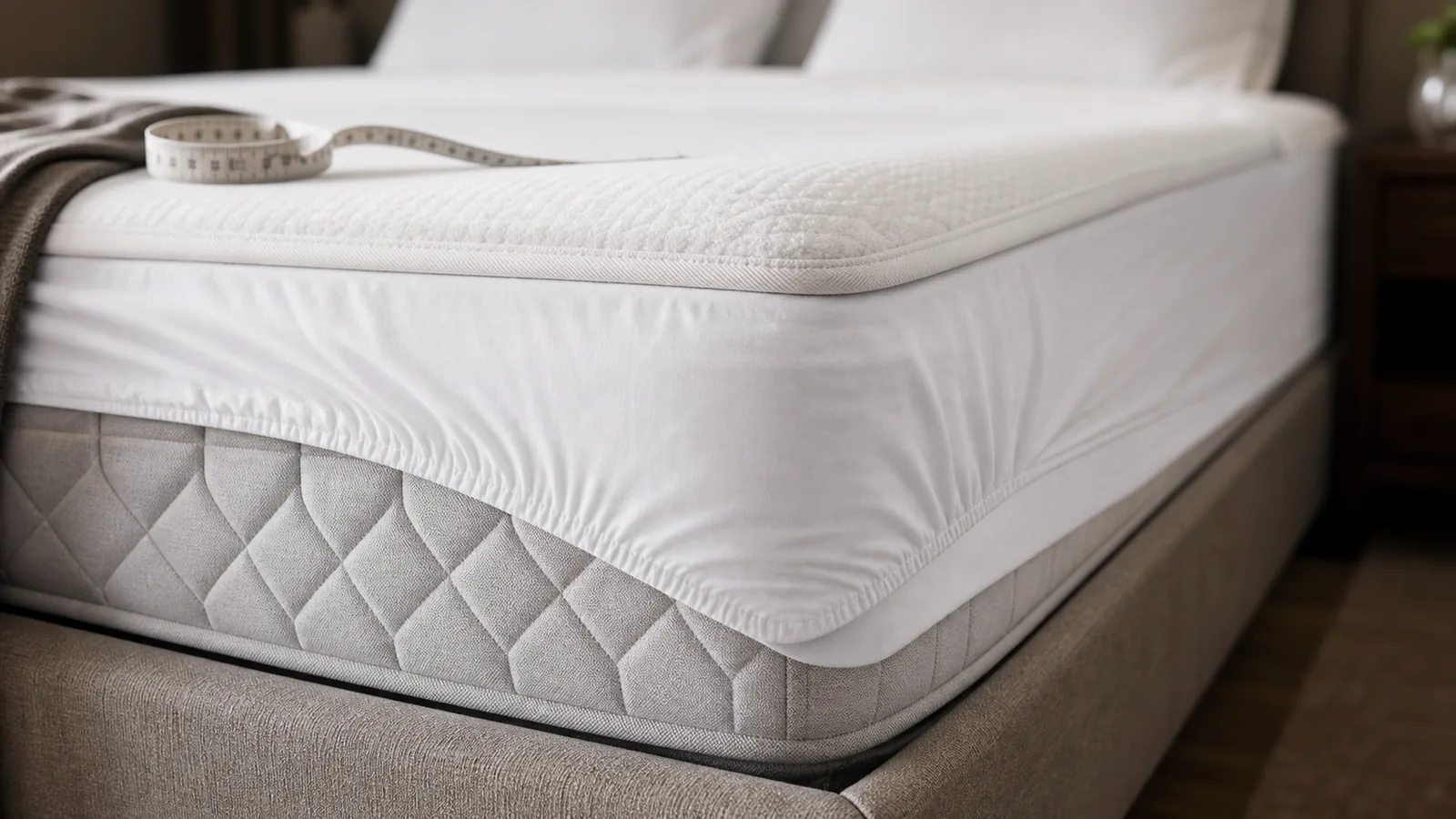
- Pocket depth is the spec most buyers miss. Published US chain programs specify 12–14″ pockets because a modern mattress plus topper stack is far taller than the mattress alone.
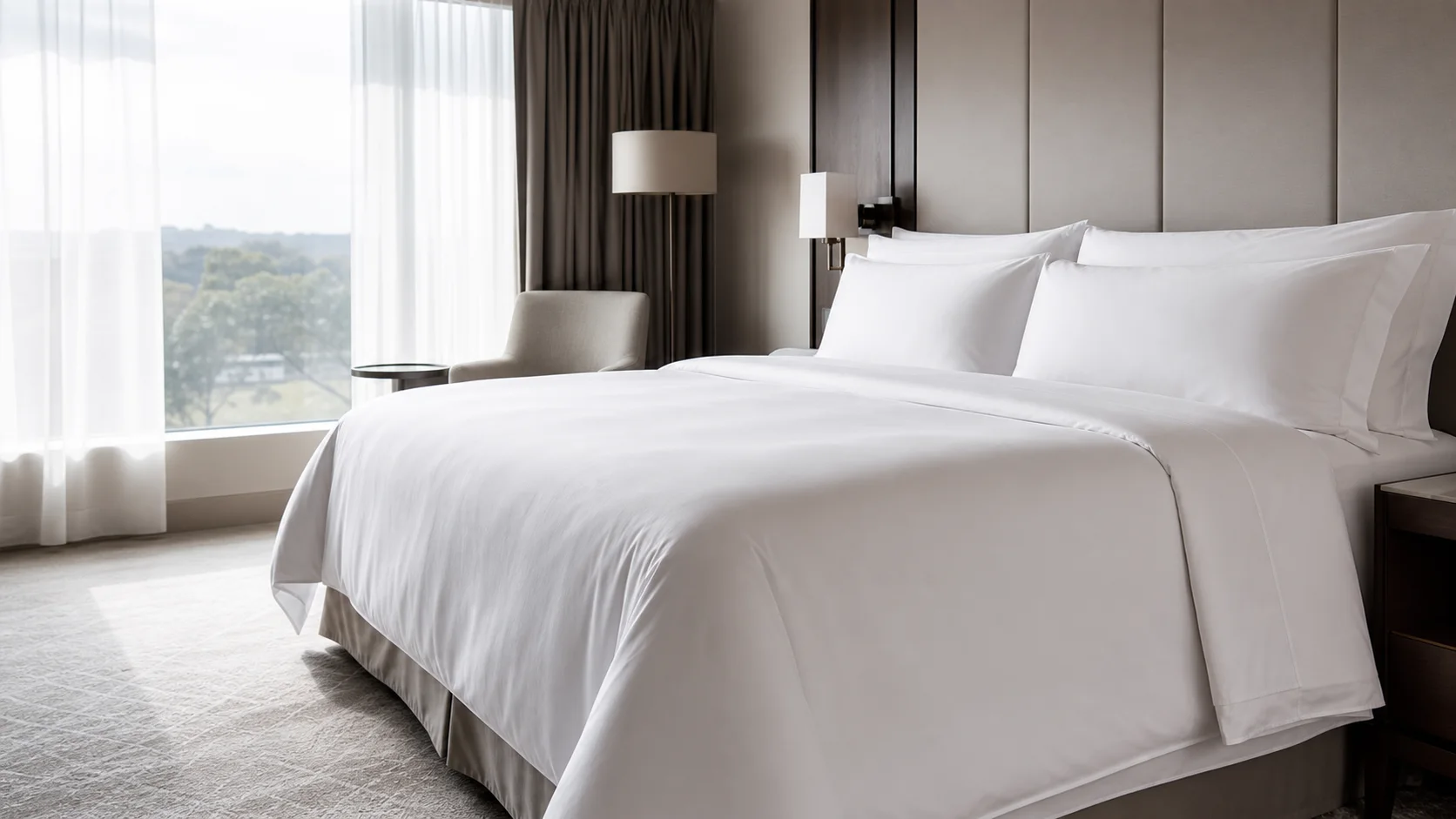
- Flat sheets run ~110″ long in hotel programs — longer than retail — to allow proper foot tucks and full turnback.
- Hotels color-code sheet sizes on the hem thread, so staff identify a folded sheet’s size at a glance.
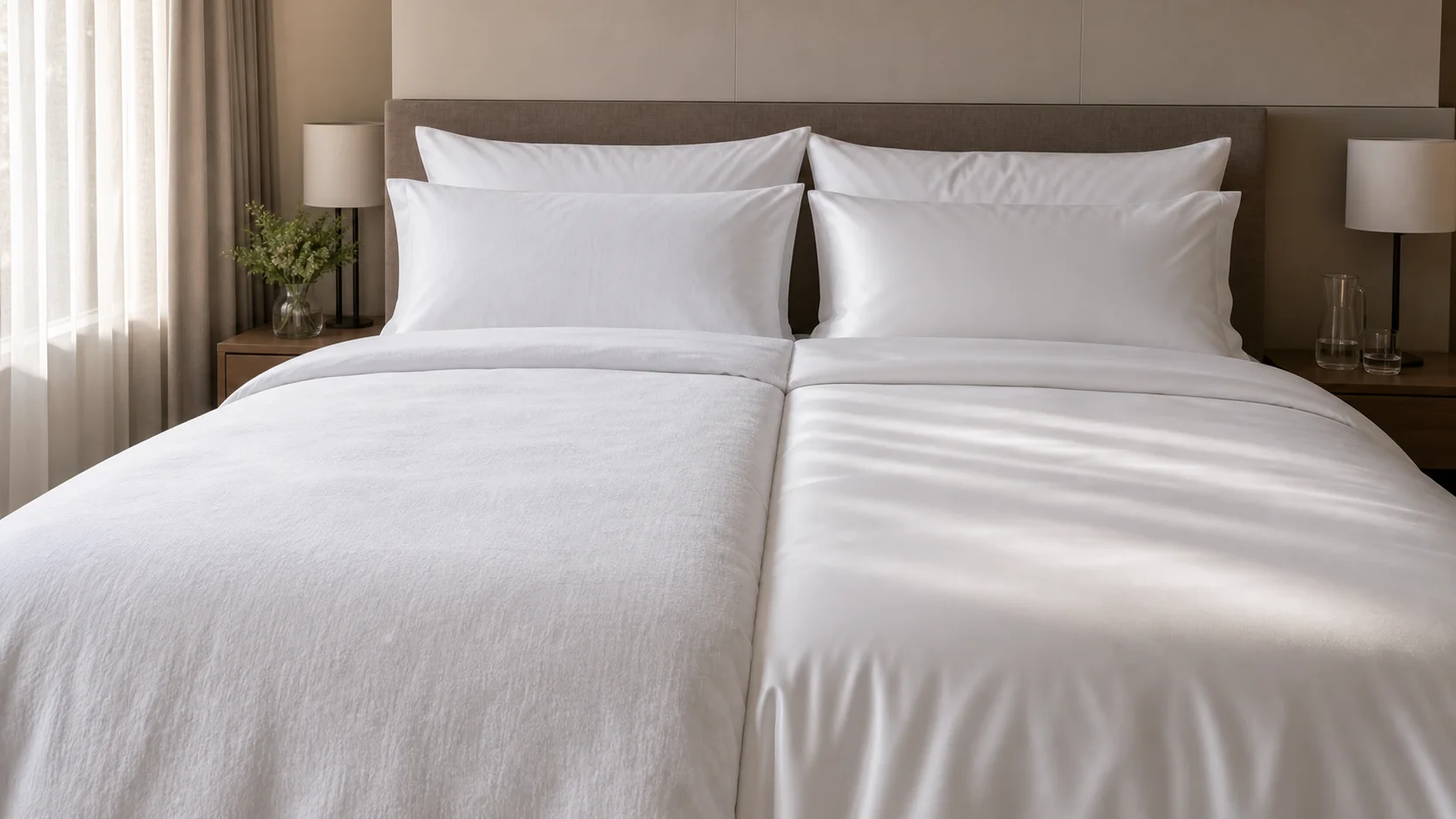
- Duvet-based programs change the count: a triple-sheet or duvet-cover build needs different pieces than a blanket-and-bedspread build.
US hotel sheet sizes
US mattresses come in standard footprints, but hotel sheets are cut generously around them. Dimensions below reflect published hospitality supply programs rather than retail packaging:
Fitted sheets
| Bed | Mattress | Typical hotel fitted sheet | Pocket depth |
|---|---|---|---|
| Twin | 38 × 75″ | 39 × 75–80″ | 9–12″ |
| Full/Double | 54 × 75″ | 54 × 80″ or 55 × 80″ | 12–14″ |
| Queen | 60 × 80″ | 60–62 × 80″ | 12–14″ |
| King | 76 × 80″ | 78 × 80″ | 12–14″ |
| Cal King | 72 × 84″ | 72 × 84″ | 12–14″ |
Flat sheets
| Bed | Typical hotel flat sheet |
|---|---|
| Twin | 66 × 104–110″ |
| Full/Double | 81 × 104–110″ |
| Queen | 87–90 × 110″ |
| King | 99–108 × 110″ |
The 110″ length is deliberate: it leaves enough fabric for a deep foot tuck and a folded turnback over the duvet or blanket, which is what makes a hotel bed photograph the way it does.
Why pocket depth dominates US sizing
A bare 10″ mattress is rare in a hotel room. The real stack is mattress + fitted protector + topper, often 13–15″ tall. That is why current published chain programs specify 14″ pockets on Full through King fitted sheets, and why one official brand manual requires “deep pocket fitted sheets only.” When you spec fitted sheets, measure the full made-up stack — not the mattress label.
European hotel sheet sizes
European hotels size beds by mattress width in centimeters, almost always 200 cm long:
| Bed type | Mattress (cm) | Flat sheet (cm) | Duvet cover (cm) |
|---|---|---|---|
| Single | 90 × 200 | 180 × 290 | 140 × 200 |
| Large single | 120 × 200 | 200 × 290 | 155 × 220 |
| Double | 140 × 200 | 240 × 290 | 200 × 200 |
| Queen (EU) | 160 × 200 | 270 × 290 | 220 × 220 |
| King (EU) | 180 × 200 | 280 × 290 | 240 × 220 |
| Super King | 200 × 200 | 300 × 290 | 260 × 220 |
One global operator’s current design standards define the guestroom bed range in exactly these metric steps — Super King 200 × 200, King 180 × 200, Queen 160 × 200, Double 140–150 × 200, Twin 100–110 × 200 cm — which is why international projects should be specified metric from day one and converted only at the very end, if at all.
A US “King” (76 × 80″ ≈ 193 × 203 cm) sits between a European King and Super King; a US Queen (60 × 80″ ≈ 152 × 203 cm) is narrower than a European Queen. Never map US and EU size names one-to-one — map centimeters.
Color-coded hems: the laundry-room convention
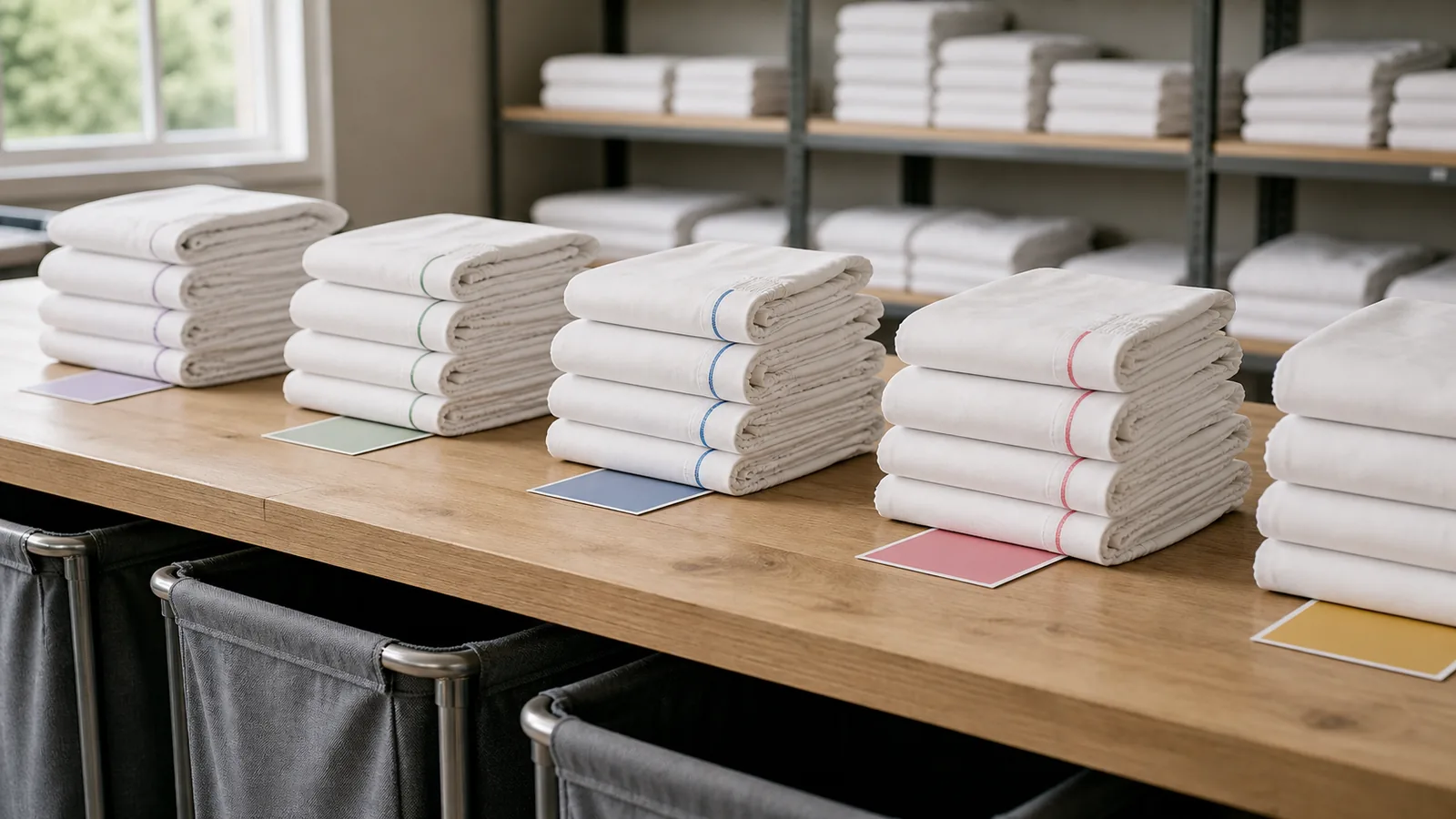
A folded white fitted sheet gives no visual clue to its size. Hotel programs solve this with colored hem thread: published US chain bedding collections stitch, for example, blue thread on Full, pink on Queen, and green on King — and one brand manual permits colored thread only on the 1″ bottom hem, keeping the visible 3″ top hem white. Room attendants and laundry staff sort by thread color without unfolding anything.
If you run more than one bed size on property, adopt the convention. Any mill can stitch hem identification; it costs nothing at production time and saves sorting labor every day the linen lives.
Sizing checklist before you order
- Measure the made-up mattress stack height in at least three rooms; spec pocket depth = stack + 2″.
- Confirm bed sizes room by room — renovated wings often carry different mattresses than the original build.
- Decide the bed build first (duvet cover vs triple-sheet vs blanket) because it changes which pieces and sizes you need.
- Order flat sheets long (110″) if you want proper tucks and turnback presentation.
- Specify hem color-coding whenever more than one size is in circulation.
- Write both unit systems on the PO for international mills: “Queen fitted, 62 × 80 × 14 in / 157 × 203 × 36 cm” leaves no room for interpretation.
Getting sizes right the first time
InnSupply specification packs list every sheet line in both inches and centimeters with pocket depth and hem-coding called out explicitly, so your purchasing, housekeeping, and laundry teams are reading one unambiguous document. Run your room mix through our PAR calculator and we will return a size-correct, quantity-correct linen list to quote against.