How Hotel Brand Standards Work for Linens (and What to Borrow)
Inside hotel brand standards for linens: how chains write bedding and terry specs, change frequencies, attic stock rules, and what independent hotels should copy.
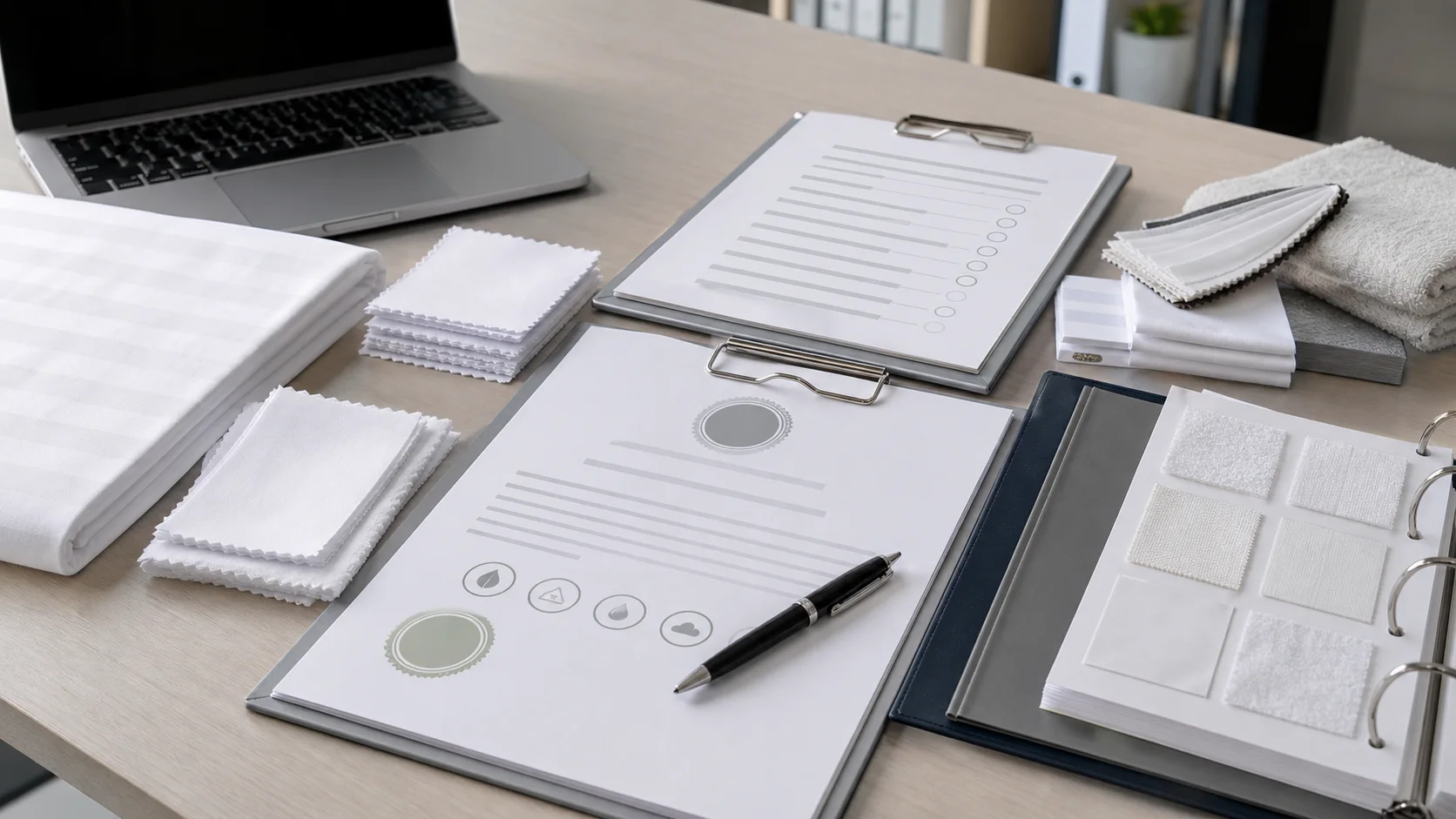
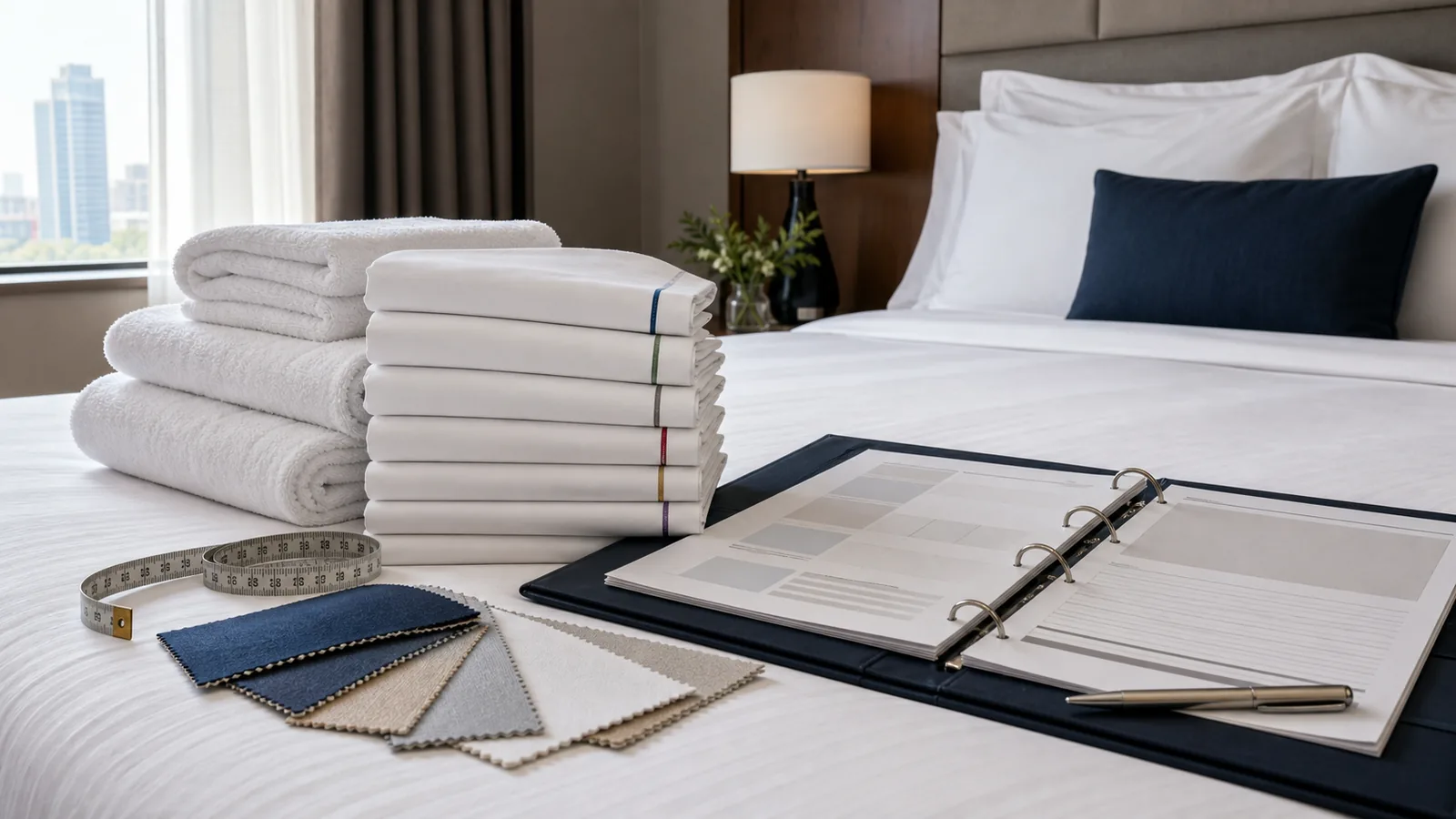
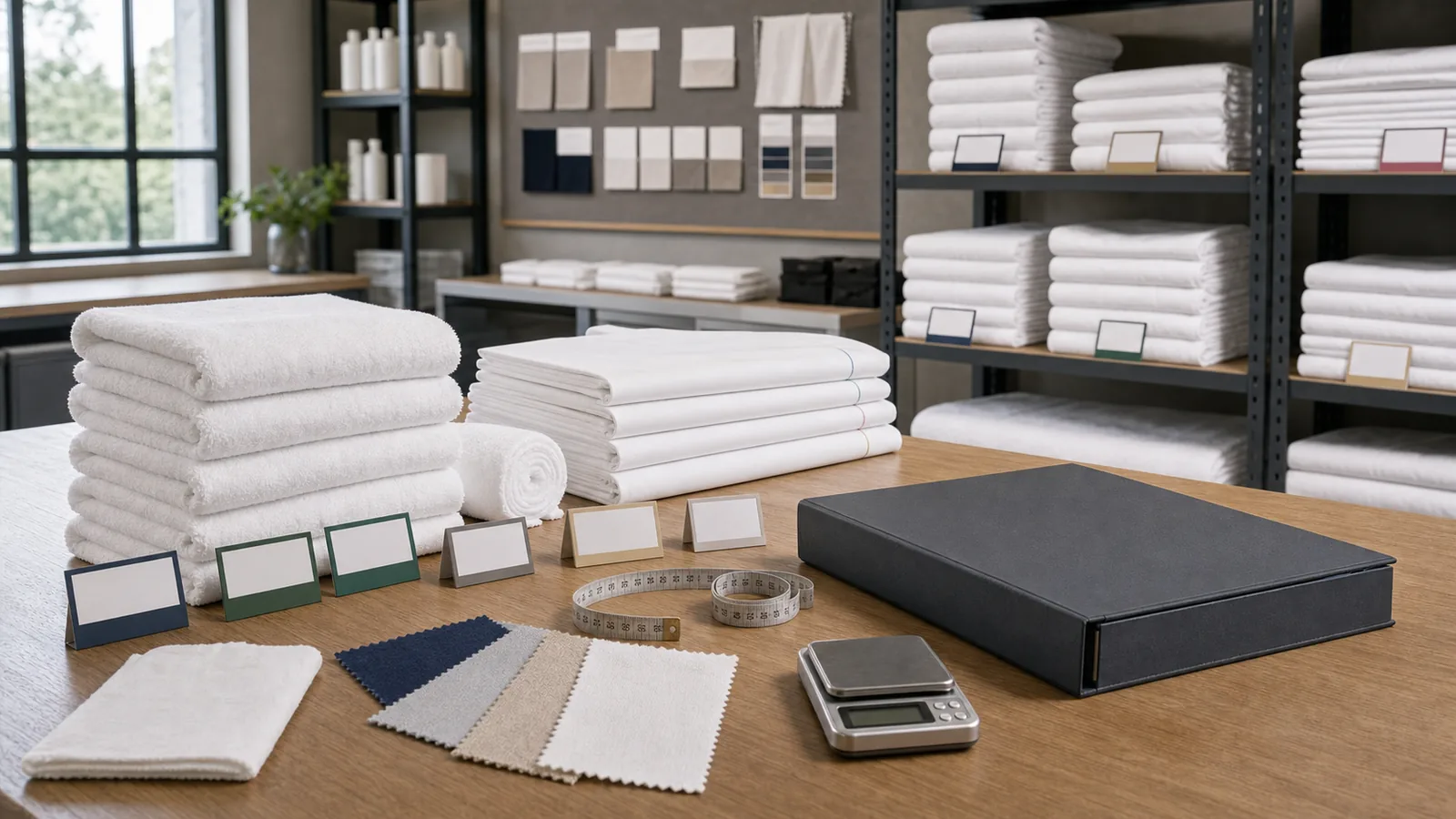
Materials and operations, shown together.
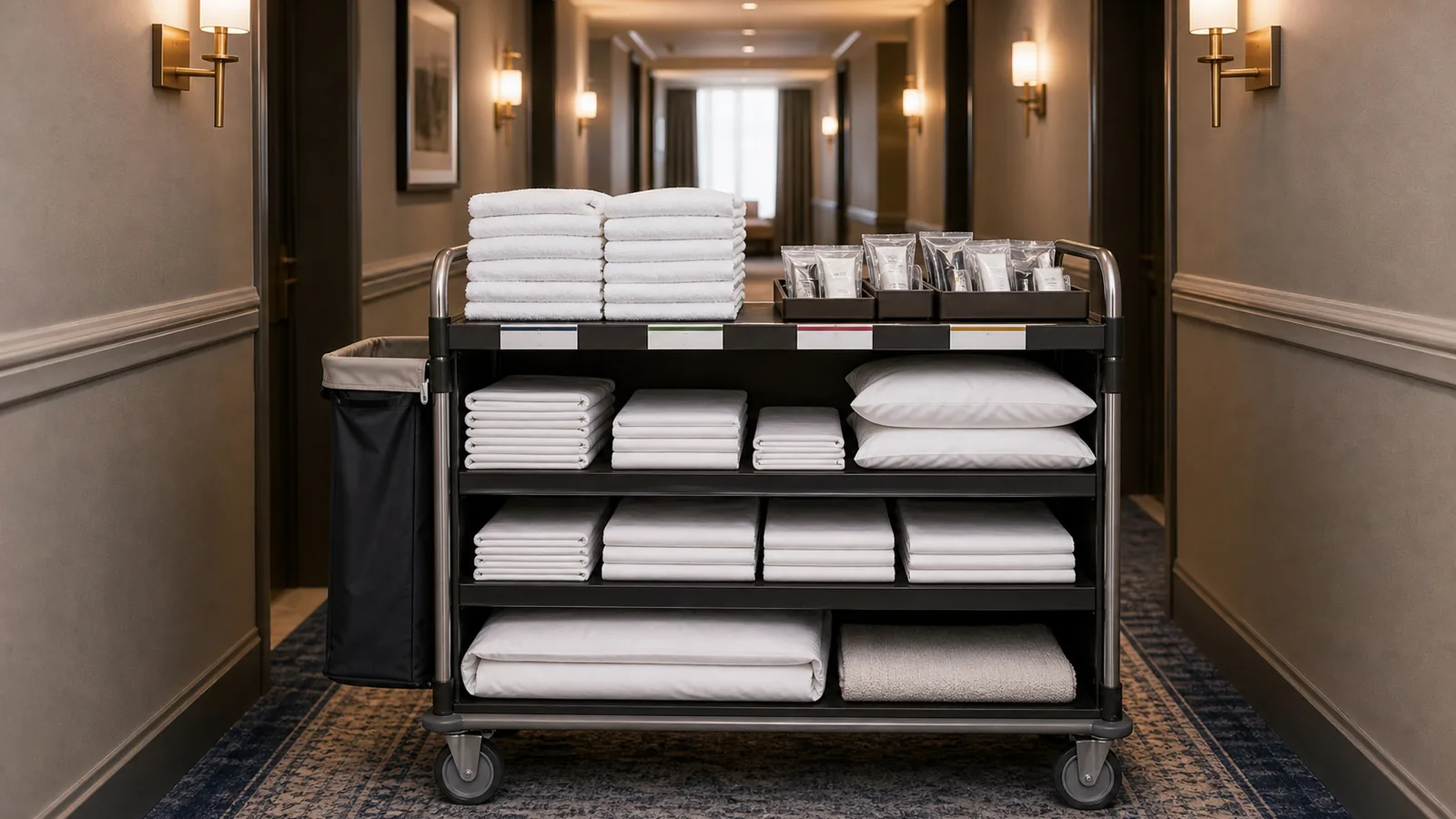
Product detail and back-of-house context help connect each specification choice to how the item looks, launders, stores, or survives service.
How Hotel Brand Standards Work for Linens (and What to Borrow)
Walk into any two hotels of the same chain, on different continents, and the bed feels the same. That consistency is not culture — it is paperwork. Every major hotel group runs on brand standards manuals: binding documents that tell a franchisee exactly what to buy, how to present it, and how often to replace it. Linens get some of the most granular treatment in those manuals, down to the color of the thread on a hem.
Most independent hoteliers never see these documents, because they live behind franchisee portals. But their structure is consistent across the industry, and understanding it — what chains regulate, why, and how compliance is checked — is the cheapest masterclass in linen program design you can get. Here is how they work, and which rules are worth borrowing even if you never fly a flag.
Key takeaways
- Chains split linen rules across two documents: design & construction standards (what to install and furnish) and operational brand standards (how to run and maintain it).
- Linen specifications cover fabric, thread count or weight, exact sizes, color, logo policy, quantities per room, change frequency, and spare-stock percentages — not just “buy white sheets.”
- Compliance is inspected and scored, with point deductions and, ultimately, franchise consequences — which is why franchisees buy pre-approved programs rather than interpret specs themselves.
- Independent hotels can adopt the highest-value rules — white non-crested linen, size color-coding, written change frequencies, attic stock — at zero extra cost.
The two manuals that govern a hotel’s linens
Design & construction standards govern the property as built: bed sizes and platforms, mattress requirements, and the furnishing rules around the bed. Real examples from current major-chain manuals include prohibitions on bed skirts, mandatory washable fitted covers on box springs, and the requirement that any decorative throw or accent pillow be machine-washable. These manuals also set attic stock — spare inventory the hotel must hold from day one, such as 5% extra box-spring covers and 2% extra decorative pillow covers.
Operational brand standards govern the running hotel: which linens must be in each room, in what quantity, and how housekeeping handles them. This is where the true linen specs live.
What a linen standard actually specifies
A typical guestroom linen section reads like a procurement contract, because it is one. Across published examples, the pattern covers:
- Fiber and construction — e.g., white cotton percale at a stated minimum thread count, or a specified polyester/Modal blend for laundry durability.
- Exact dimensions — flat and fitted sheet sizes per bed type, with pocket depth stated, not implied.
- Color and logo policy — white, non-crested, no logos is the overwhelming norm; some manuals allow colored thread only on a bottom hem, strictly for size identification.
- Terry weights — bath, hand, wash, and mat weights quoted in lbs/dozen at stated sizes, with per-bathroom quantities (a common pattern: three bath, three hand, three washcloths, one mat).
- Pillow programs — counts per bed size (four or more on a king is common), fill mix (synthetic/feather split), and whether protectors are permitted.
- Bedding build — duvet-with-cover versus triple-sheeting, and which components must be brand-approved products.
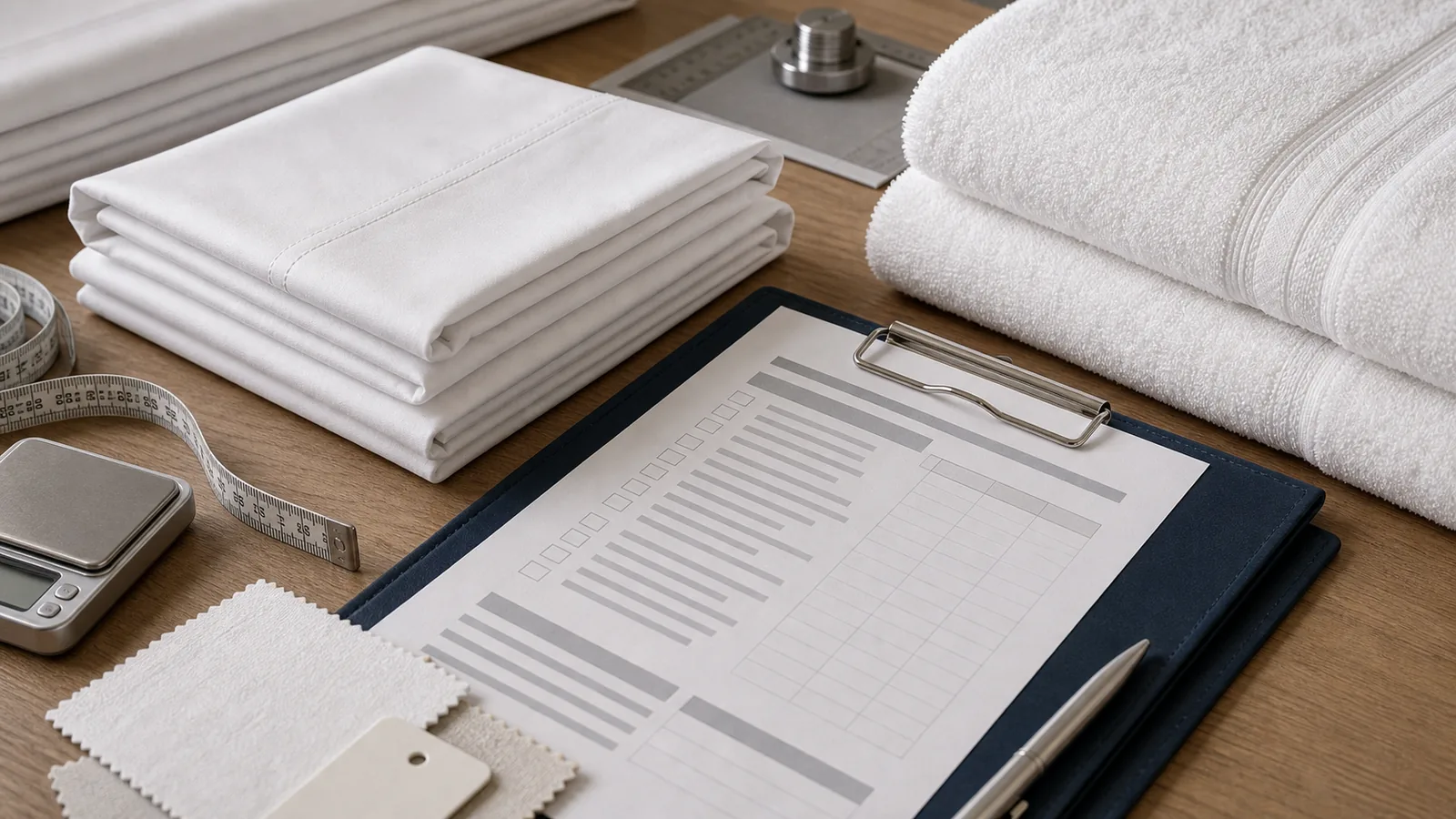
The precision has a purpose: it makes every room launderable and replaceable through one supply chain, and it makes inspection objective. An auditor with a tape measure and a scale can verify compliance.
The rules that keep linens serviceable
Beyond the shopping list, brand standards regulate the linen lifecycle:
- Change frequency. A common standard: bed linens change on every checkout, and at least every third day during a continuing stay — sooner on guest request or any time linen is stained, damaged, or below standard.
- Linen reuse programs. Where a chain runs an environmental reuse program, the manual dictates the approved guest-facing collateral and requires towels to be included if the program is offered at all.
- Condition standards. Stained, frayed, or greyed linen fails inspection regardless of age. In practice this forces a replacement rate of roughly 25–35% of circulating stock per year, which is why attic stock and reorder cadence are written into the program.
Why franchisees buy “approved” programs
Chains pre-approve specific products with specific mills and distributors, and franchisees overwhelmingly buy those SKUs rather than sourcing to spec independently. The approved route removes compliance risk — the product is by definition inspection-proof — and pools the chain’s volume for pricing. It is also why the actual specifications become semi-public: approved items are sold through open hospitality distributors whose listings state the specs verbatim.
For suppliers, this defines the market’s shape: to serve flagged hotels you either get onto approval lists or you sell to the segments the lists leave open — independents, soft brands, and international properties outside the program’s distribution.
What an independent hotel should borrow
You do not need a franchise agreement to run flag-grade linen. Adopt the five highest-value rules:
- White, non-crested everything. Maximum laundry interchangeability, no dye-lot drift between reorders, easy stain treatment, and guests read white as clean.
- Color-coded size hems. Costs nothing at the mill; saves sorting labor every single day.
- Write your change frequency down. “Checkout plus every third stay-over day” is the de facto industry standard — put it in your housekeeping SOP so it survives staff turnover.
- Hold attic stock. Order 5–10% above opening PAR so a delivery delay never puts rooms out of service.
- Specify like a chain. Fiber, construction, size with pocket depth, weight in both lbs/dozen and GSM, quantity per room — on paper, before you ask anyone for a price.
Put your own standard in writing
The real lesson of brand standards is not any single spec — it is that the linen program exists as a document, not as tribal knowledge. InnSupply builds that document with you: our specification packs state every line item at chain-manual precision, so your property runs on a written standard whether or not there is a flag on the roof.