What Linens Do Major Hotel Chains Specify? A 2026 Sourcing Snapshot
The bed linen and towel specs behind major chain hotels in 2026: thread counts, fiber blends, sizes, and terry weights from franchise-approved supply listings.
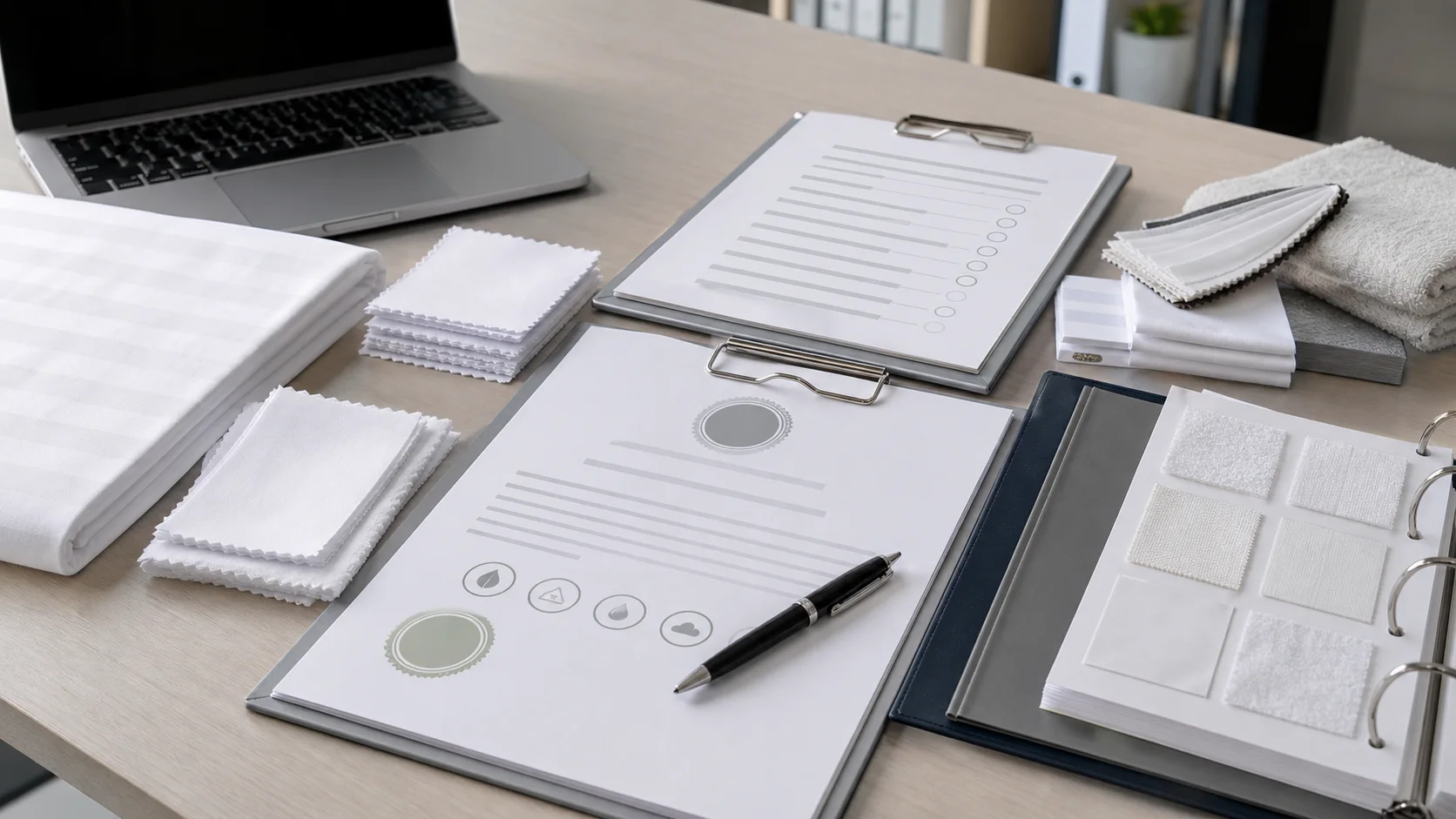
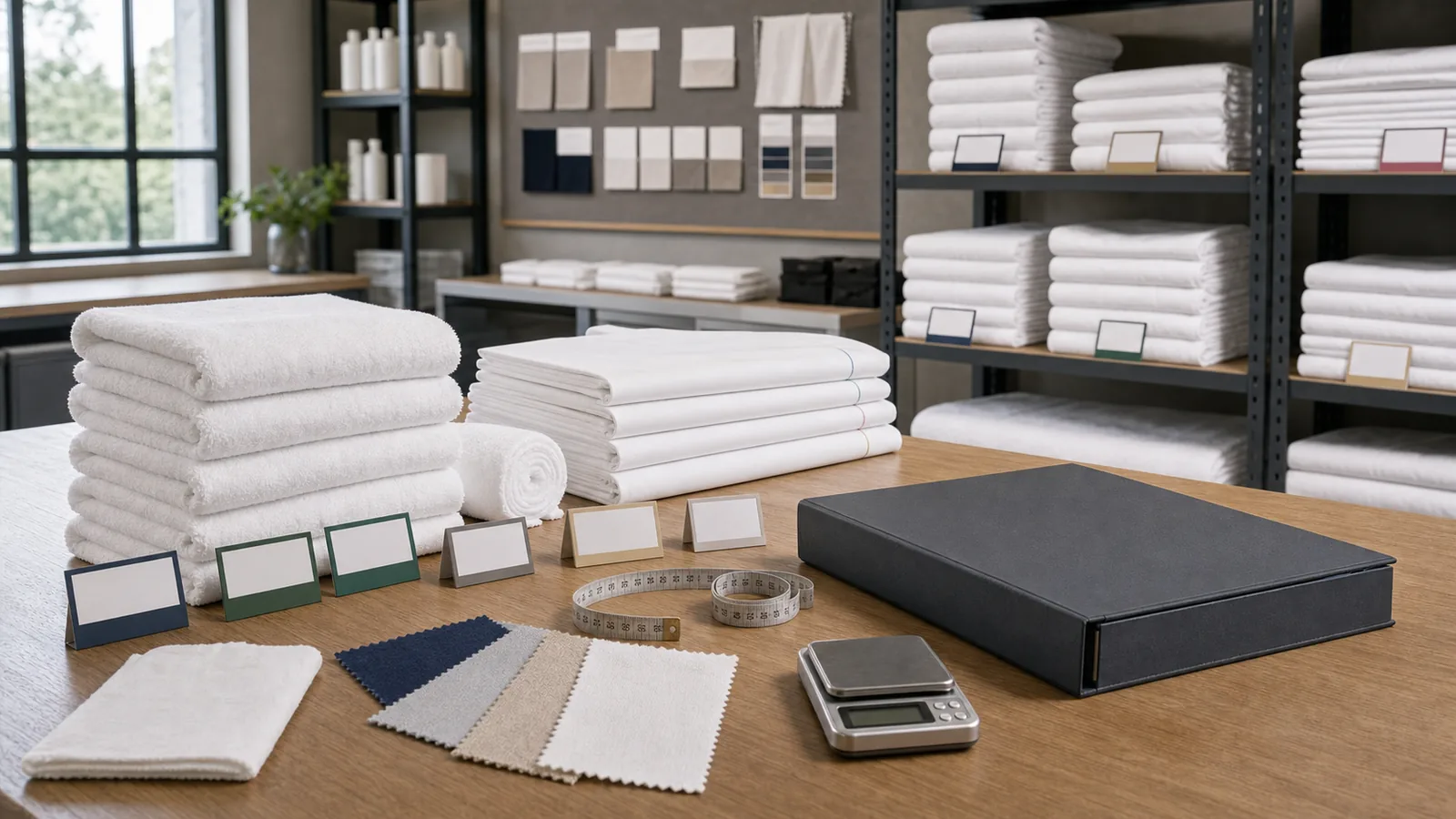
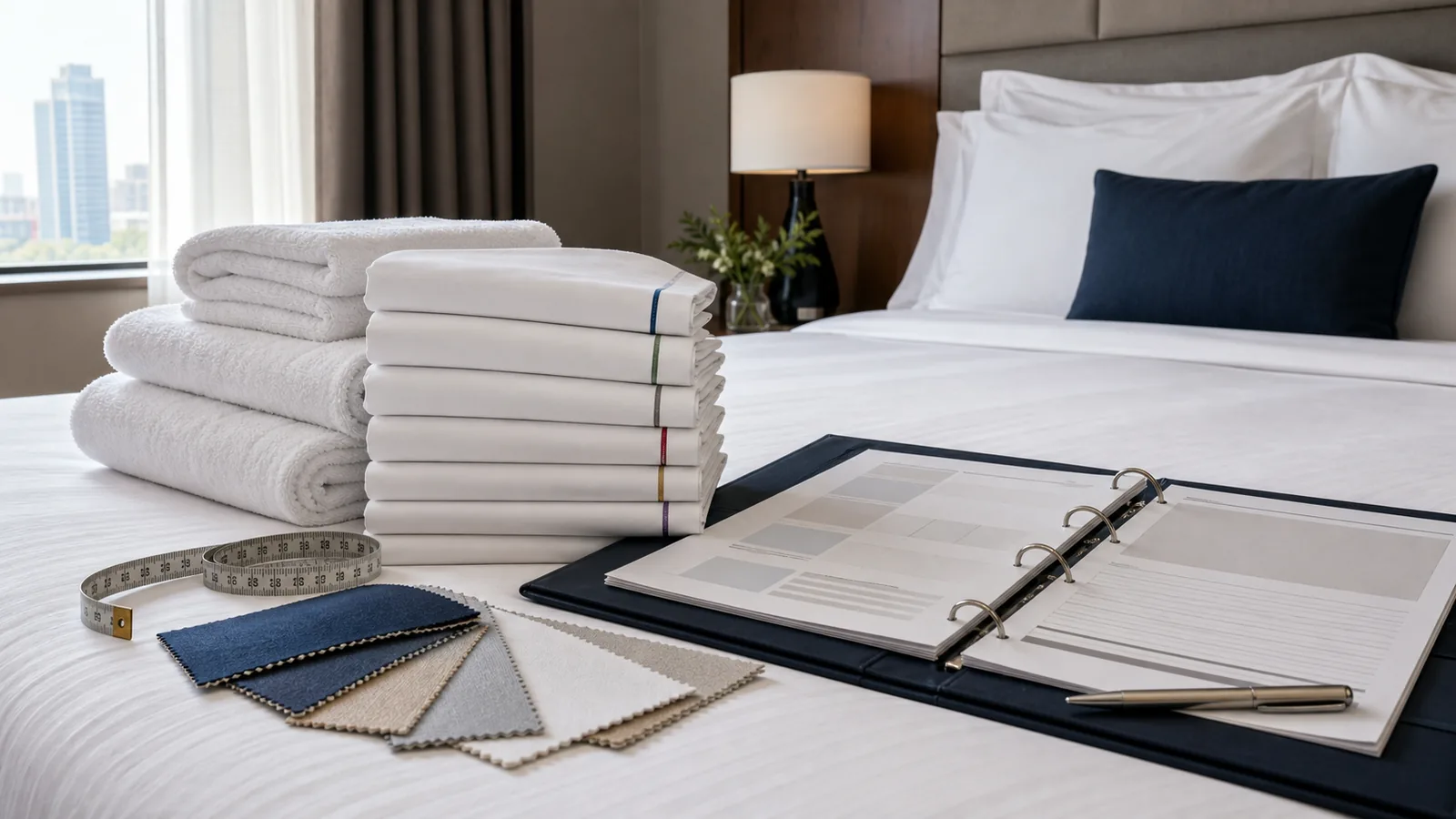
Materials and operations, shown together.
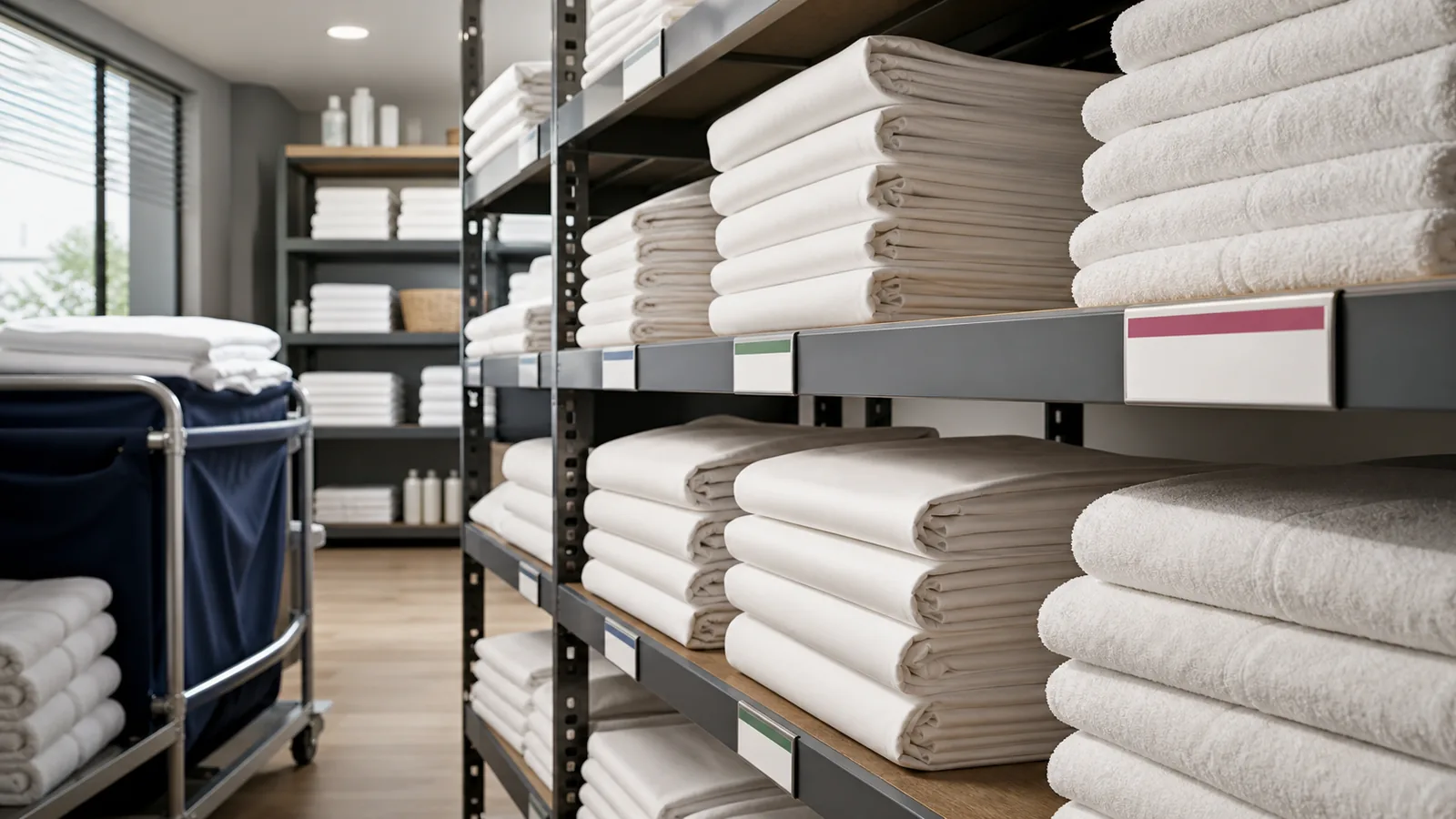
Product detail and back-of-house context help connect each specification choice to how the item looks, launders, stores, or survives service.
What Linens Do Major Hotel Chains Specify? A 2026 Sourcing Snapshot
If you run an independent property and want your rooms to feel like a global chain’s, the fastest shortcut is to buy what the chains actually buy. The good news: much of that information is public. Franchise-approved bedding and terry programs are sold through open hospitality distributors, and their listings state the exact thread counts, fiber blends, sizes, and weights that brand standards require.
This guide collects those published specifications in one place, as of July 2026. Every figure below comes from a live franchise-approved supply listing, an official brand document, or the chain’s own published bedding pages — and we date each one, because standards change.
InnSupply is an independent hotel supplier. We are not affiliated with or endorsed by any hotel chain named below; brand names are used only to identify the published specifications they refer to. Franchisees should always confirm current requirements through their brand’s standards portal.
Key takeaways
- Midscale chains no longer insist on 100% cotton sheets. Franchise-approved sheeting for major midscale brands is now commonly a T-210, 52% polyester / 48% Modal blend — chosen for laundry durability and pressed appearance, not luxury hand.
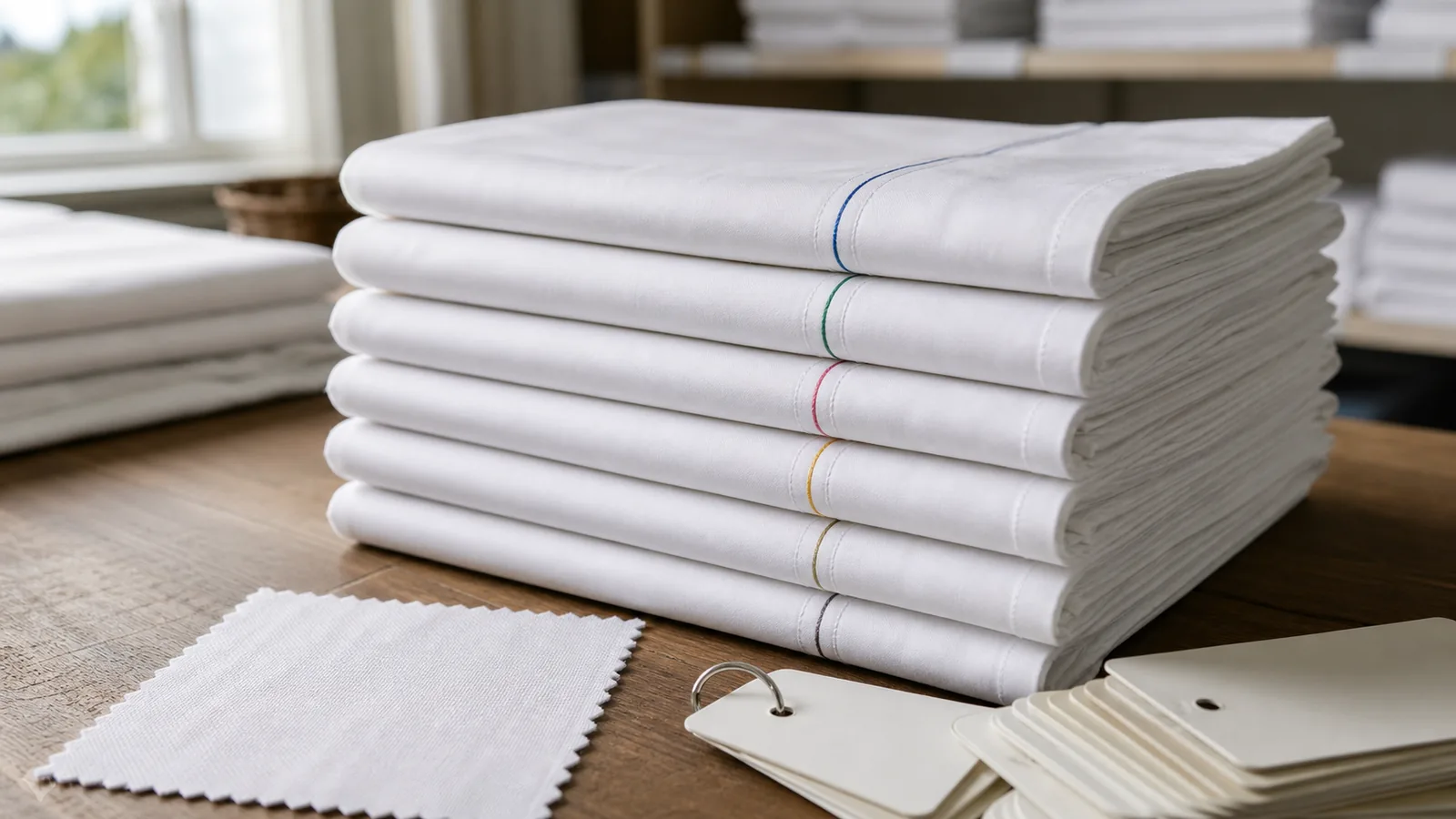
- White, non-crested, no logo is near-universal for both bed linen and terry across chains. Size identification happens through color-coded hem threads, not labels.
- Terry converges on a dobby-border, 97% cotton / 3% polyester construction at roughly 15–16 lbs/dozen for a 27×54″ bath towel — about a 600 GSM equivalent.
- European groups still spec cotton percale. Where US midscale programs moved to blends, major European brands keep 100% cotton percale sheeting and add details like anti-microbial pillowcase cotton.
- Upscale tiers step up to T-300 blends or better, and luxury programs move to managed procurement where specs are not published at all.
Midscale America: the T-210 blend era
The clearest public window into chain linen standards is the franchise-approved bedding sold for one of the world’s largest midscale families — the collection covering Holiday Inn, Holiday Inn Express, Staybridge Suites, and Candlewood Suites. As listed by national hospitality distributors in 2026, the fitted sheets are:
| Size | Dimensions | Hem thread |
|---|---|---|
| Full | 55 × 80 × 14″ | Blue |
| Queen | 62 × 80 × 14″ | Pink |
| King | 78 × 80 × 14″ | Green |
All are T-210, 52% polyester / 48% Modal, white, carrying the brand’s bedding collection label. Three details stand out for buyers:
- The blend is the standard, not a compromise. Modal (a beechwood cellulosic) adds softness and moisture handling; polyester adds tensile strength and wrinkle recovery straight from the commercial dryer. For a 200+ wash-cycle life, that beats budget cotton.
- 14-inch pockets are specified, reflecting today’s thicker mattress-plus-topper builds.
- Color-coded hem threads let room attendants pick the right size from a folded stack without unfolding anything. It is a tiny spec that saves real labor minutes.
The same family’s upscale sister brand steps up to a T-300 flat sheet in the same 52/48 polyester/Modal blend — same fiber logic, finer yarn.
For terry, the published program for the same midscale brands is a dobby-border, 97% cotton / 3% polyester construction: bath towels 27 × 54″ at 15 lbs/dozen, hand towels 16 × 30″ at 4.5 lbs/dozen, all white. Converted to metric, that bath towel is roughly a 600 GSM equivalent — plusher than most independents expect a midscale chain towel to be.
The cotton percale tradition
Not every program went to blends. An official brand standards manual for a major global chain’s upper-midscale brand — the full manual circulates publicly, though its edition dates to 2010, so treat it as historical context rather than the current requirement — specified:
- White cotton percale sheeting, T-200 or higher, with a no-tuck flat top sheet
- Flat sheet sizes of 81 × 110″ (Full), 87 × 110″ (Queen), and 99 × 110″ (King)
- Deep-pocket fitted sheets only; colored thread permitted on the 1″ bottom hem exclusively for size identification, white thread on the 3″ top hem
- Bathroom terry, all white and non-crested: bath towels 27 × 54″ at 16.25 lbs/dozen, hand towels 16 × 30″ at 4.0 lbs/dozen, washcloths 13 × 13″ at 1.5 lbs/dozen, bath mats 20 × 34″ at 10.0 lbs/dozen
- Quantities of three bath towels, three hand towels, three washcloths, and one mat per bathroom
Even at fifteen years’ distance, the document shows how precisely chains write linen standards — down to hem thread color and pounds per dozen — and today’s supplier listings for the same tier still track those numbers closely.
European groups keep the cotton line alive at scale: the published bedding programs of major French-headquartered brands specify 100% cotton percale sheeting, with details like 100% anti-microbial cotton pillowcases and 7 cm mattress toppers as brand-wide requirements.
Economy tiers: engineered for laundry survival
At the economy end, published franchise collections go fully synthetic — for example, a major economy family’s approved fitted sheet is 100% polyester microfiber, 54 × 80 × 12″. Microfiber dries faster, resists wrinkling without pressing, and costs less per wash cycle; the trade-off is hand feel, which economy rate positioning absorbs.
Reported retail and club collections for other large franchise groups sit between the poles — 250–300 thread count cotton or cotton-rich sheeting — though these figures come from consumer-facing programs rather than published franchise SKUs, so treat them as indicative.
Design rules that ride along with the linen
Chain standards also constrain how bedding is presented. A current design standards manual for one global operator (2020 edition) prohibits bed skirts outright, requires washable fitted covers on any box spring, requires all throws and accent pillows to be washable, and even sets attic-stock levels — 5% spare box-spring covers, 2% spare decorative pillow covers. If you benchmark against chains, budget for the program around the linen, not just the linen itself.
What an independent hotel should copy
- Buy white, non-crested, and size-coded. Every major program does; it maximizes laundry interchangeability and simplifies replacement.
- Match the tier, not the myth. Midscale chains run T-210 blends and ~600 GSM-equivalent towels. You do not need T-400 cotton to feel “chain standard” — you need consistency and correct sizing.
- Specify pocket depth. 12–14″ pockets are the published norm because real mattress stacks grew.
- Date your sources. Standards manuals are revised continuously. The numbers above are current as of July 2026 from live supply listings; official manuals in circulation may be years old.
Sourcing chain-grade linens without the chain
InnSupply supplies hotel linens built to these same construction standards — percale and blend sheeting from T-200 to T-300, dobby-border terry from 400 to 650 GSM — in white, non-crested, size-coded programs. Use our PAR calculator to size the order, and request a specification pack to compare line-by-line against any brand standard you are working to.