Hotel Table Linen Guide: Fabric, Sizing & Care
Hotel table linen, explained: fabric types, tablecloth sizing by drop, napkin sizes, banquet setup, and commercial-laundry care that protects your budget.
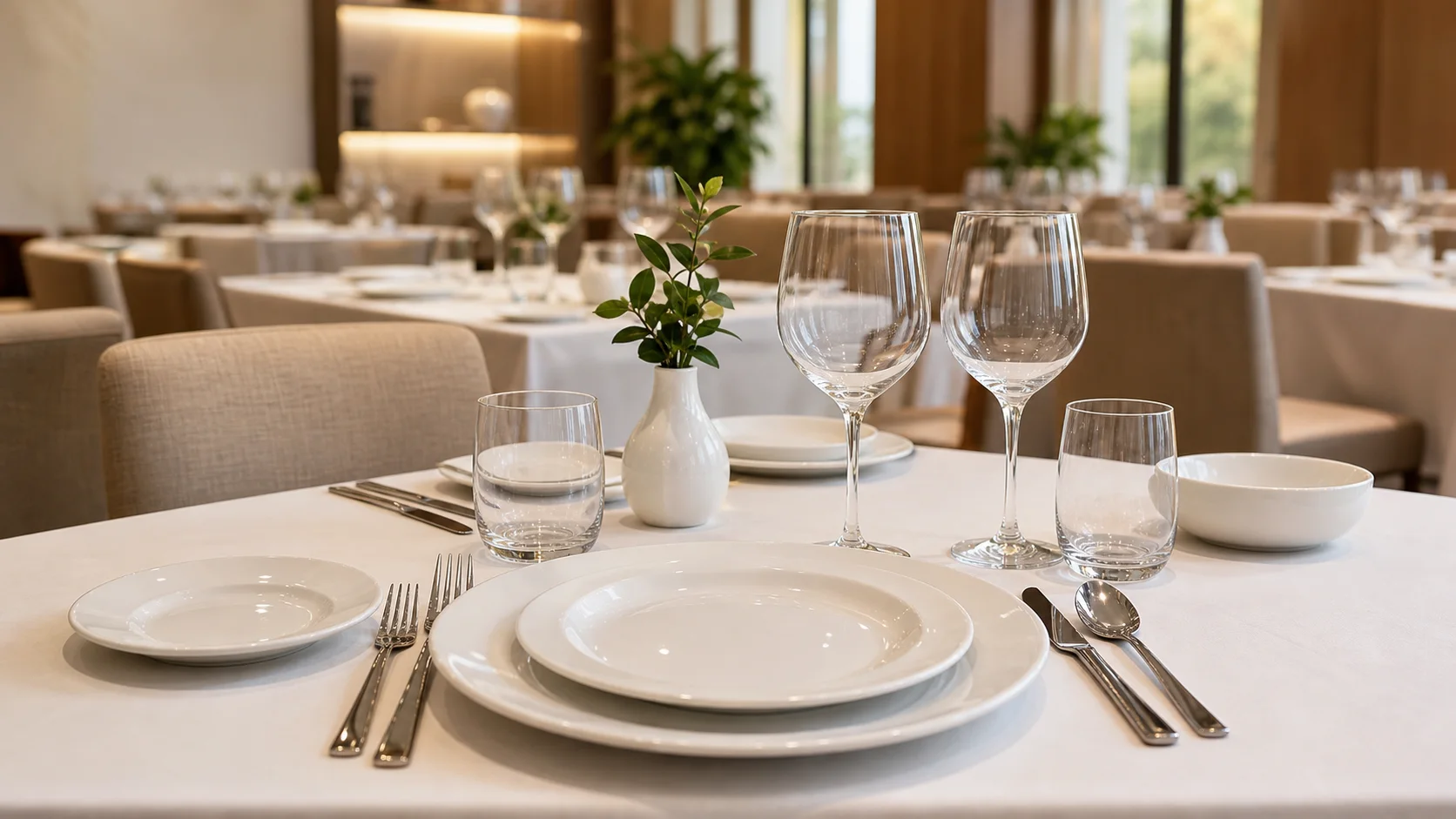
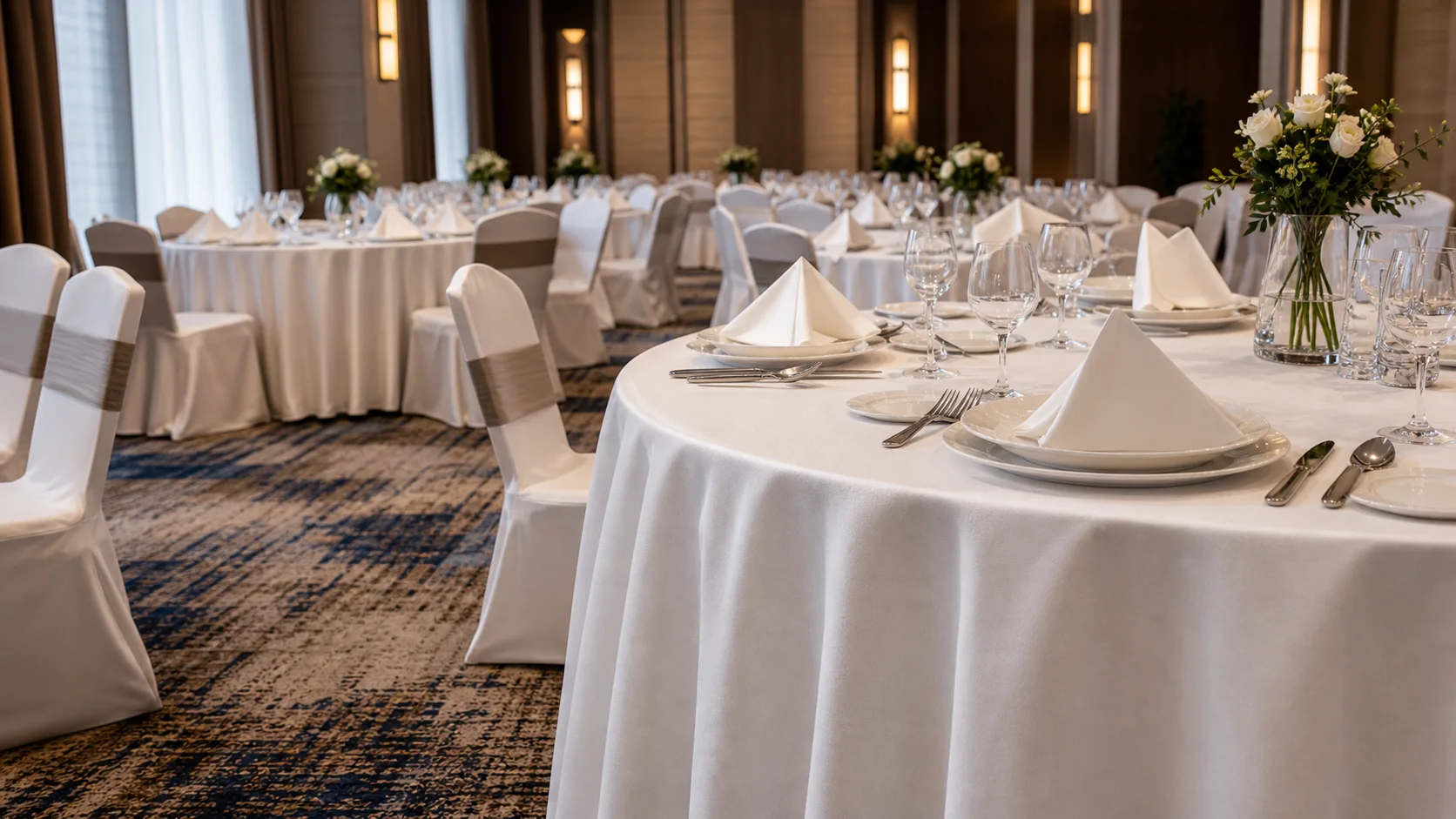
Materials and operations, shown together.
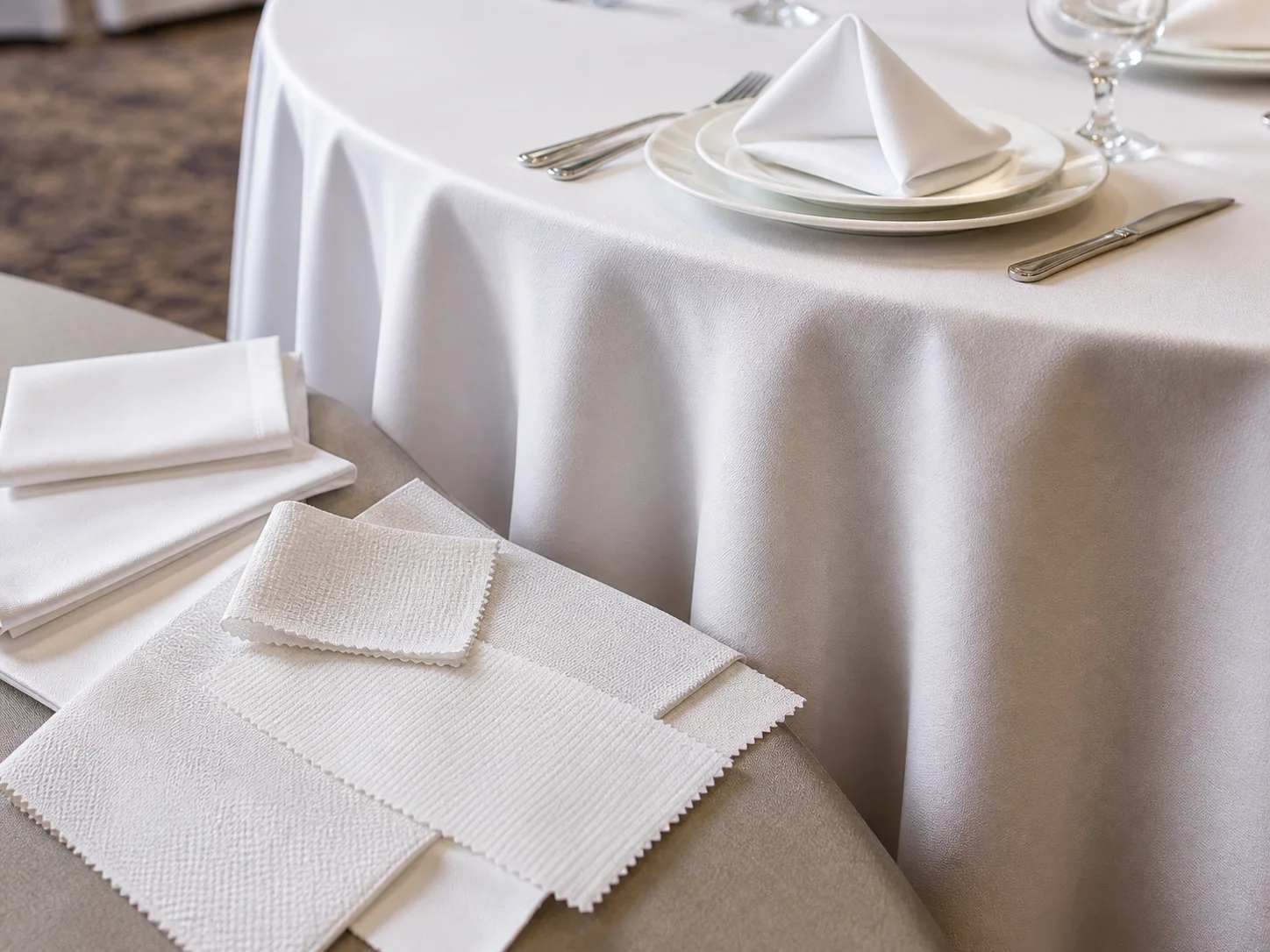
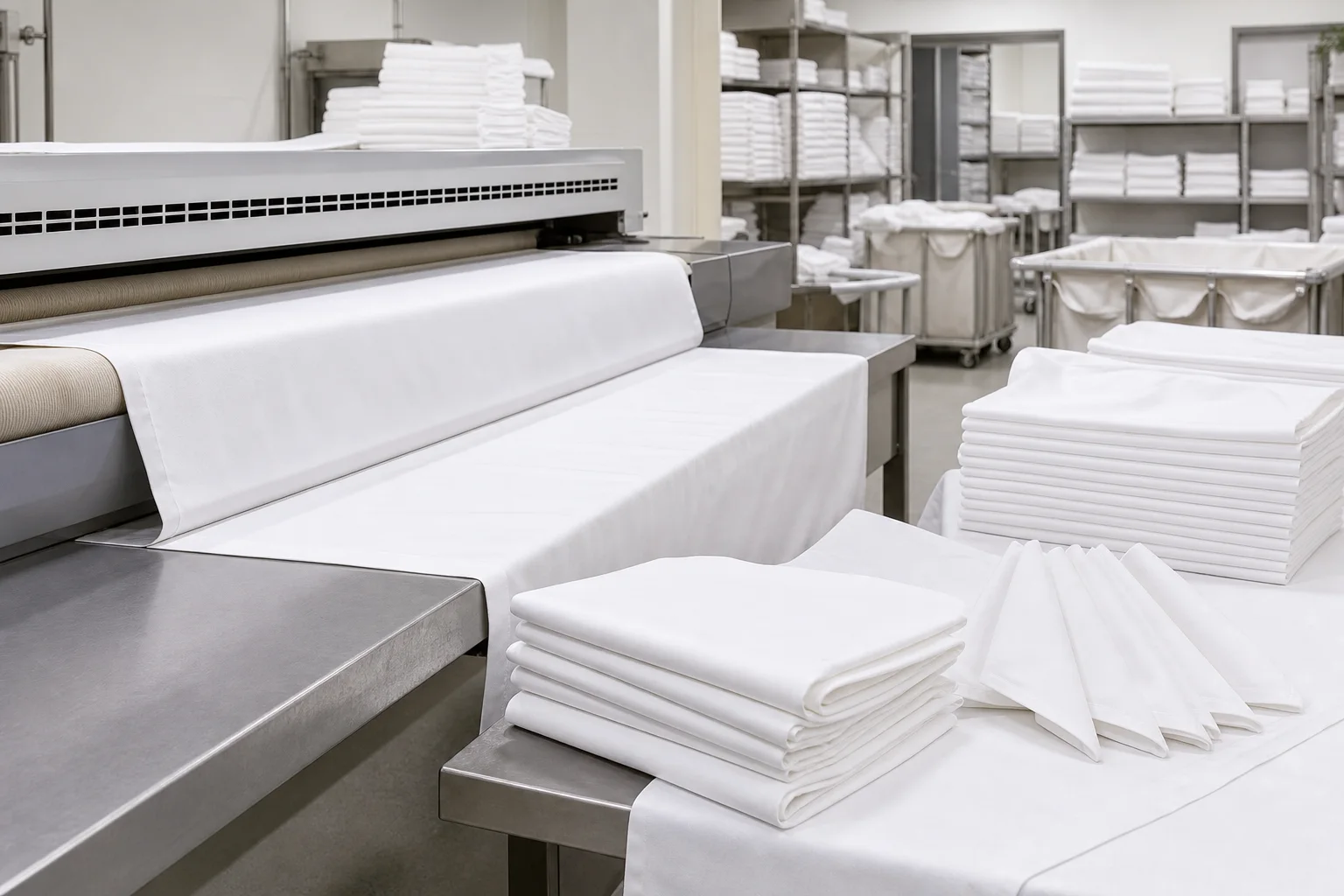
Product detail and back-of-house context help connect each specification choice to how the item looks, launders, stores, or survives service.
Hotel Table Linen Guide: Fabric, Sizing & Care
Table linen is the most visible textile in any hotel restaurant, banquet hall, or event space. It’s also the most abused. A single banquet shift can put a tablecloth through wine spills, candle wax, plate friction, and a punishing commercial-laundry cycle, all before lunch service the next day. If you handle F&B or banquet procurement, picking the right hotel table linen comes down to three things you have to weigh at once: how it looks, how long it lasts, and what each laundered use actually costs you.
This guide walks through the linen you’ll actually order, the fabrics that survive industrial laundering, how to size a tablecloth by drop, the standard napkin dimensions, and the care habits that keep your stock in rotation longer.
Key takeaways
- Spun polyester runs most banquet floors because it shrugs off stains, releases soil, and takes hundreds of industrial wash cycles. Poly-cotton blends and 100% cotton/satin-band stay on the shelf for premium fine dining, where a softer linen look earns its keep.
- Size a tablecloth by adding twice the drop to each table dimension. A casual lap-length drop runs 8-12 in (20-30 cm); a formal floor-length banquet drop is roughly 28-30 in (71-76 cm).
- Common round cloth sizes are 90”, 108”, 120”, and 132”. Banquet rectangulars are sized to fit 6 ft and 8 ft trestle tables.
- Napkins come in cocktail, luncheon, and dinner sizes. Dinner napkins (20-24 in / 51-61 cm) are the standard for full table service.
- Colorfastness and wrinkle resistance matter just as much as fabric weight once linen starts facing high-temperature commercial laundering.
Table linen types every hotel uses
A complete banquet and restaurant linen program is a lot more than tablecloths. Each piece does a job, and it pays to spec them as one coordinated system so colors and finishes match across the inventory.
- Tablecloths: the base layer that defines the table. Sized by table shape (round, rectangular, square) and drop.
- Overlays (toppers): a smaller square or round cloth laid diagonally over the base cloth to add a contrasting color, texture, or pattern without recovering the whole table.
- Napkins: the highest-volume linen item by piece count, and the one guests handle most directly.
- Table runners: narrow strips run down the center of a table for visual accent, common in casual and modern settings where you skip a full cloth.
- Table skirting: pleated or shirred panels clipped around the edge of buffet, registration, and head tables to hide legs and storage underneath.
- Chair covers and sashes: full fabric covers that transform banquet chairs for weddings and galas, finished with a contrasting tie-back sash.
- Slip cloths: a small square cloth placed over a full-length tablecloth, often swapped between courses or covers to refresh the setting without stripping the table.
Spec these together and your event spaces stay visually consistent, plus reordering gets simpler, because one fabric and color family can carry across cloths, napkins, runners, and skirting.
Hotel table linen fabrics explained
Fabric drives both the look and the laundered lifespan of your linen. Here are the materials banquet and F&B buyers run into most.
Spun polyester
The banquet workhorse. Spun polyester is engineered to mimic the soft hand of cotton while delivering polyester’s durability. You get excellent stain release (oils and food soils lift in a standard wash), strong wrinkle resistance, solid colorfastness on dyed and colored linen, and the muscle to survive hundreds of high-temperature industrial cycles. For high-volume banquet and conference service, it’s usually your lowest cost per use.
Poly-cotton blends
Blends (commonly 50/50 or close to it) split the difference. You get more natural softness and breathability than pure polyester, with better durability and easier laundering than pure cotton. A sensible pick for hotel restaurants that want a slightly more premium hand without the maintenance headache of 100% cotton.
100% cotton and satin-band
Save these for fine dining and luxury banquets, where the look and feel of natural fiber justifies the higher care cost. Cotton wrinkles fast, needs careful pressing, and resists stains less well, but that matte drape and softness read as premium. Satin-band cotton adds a woven satin stripe near the hem for a quiet, elegant border.
Weaves and finishes
The fiber is only half the story. The weave shapes appearance and performance too:
- Damask / jacquard: patterns woven straight into the cloth (not printed), giving a subtle tone-on-tone design that signals quality and hides minor soil between courses.
- Visa finish: a treated polyester finish known for outstanding wrinkle resistance and easy care. It’s a banquet staple wherever crisp, press-free presentation matters.
- Momie (faille) finish: a fine pebbled texture that diffuses light, downplays creasing, and resists showing wear over a long service life.
When the linen look matters
A true linen look, that slightly slubby, natural texture of flax, suits boutique, garden, and rustic-luxe concepts. Genuine linen is expensive to maintain at scale, so most hotels chase the aesthetic with textured polyester or poly-cotton that delivers the look and still stands up to commercial laundering.
Fabric comparison table
| Fabric / finish | Durability | Stain release | Wrinkle resistance | Best use |
|---|---|---|---|---|
| Spun polyester | Excellent | Excellent | High | High-volume banquets, conferences |
| Poly-cotton blend | Very good | Good | Good | Hotel restaurants, daily service |
| 100% cotton / satin-band | Moderate | Lower | Low (needs pressing) | Fine dining, luxury banquets |
| Damask / jacquard (poly) | Very good | Good | Good | Premium presentation, formal tables |
| Visa finish | Excellent | Good | Very high | Press-free banquet service |
| Momie finish | Excellent | Good | High | Long-life, crease-resistant settings |
How to size a tablecloth
Sizing is where most ordering mistakes happen. The cloth size you need rides on two numbers: the table dimension and the desired drop (how far the cloth hangs over each edge).
The formula: add twice the drop to each table dimension.
- Cloth length = table length + (2 × drop)
- Cloth width = table width + (2 × drop)
Standard drops:
- Lap-length (casual): 8-12 in (20-30 cm). The cloth reaches a seated guest’s lap. Common for everyday restaurant service.
- Mid-length: roughly 15-18 in (38-46 cm). A fuller look for upscale dining.
- Floor-length (formal/banquet): about 28-30 in (71-76 cm). The cloth reaches the floor for galas, head tables, and to-the-floor banquet presentation.
For round tables, measure the diameter and add twice the drop to get the cloth diameter. Common round cloth sizes are 90”, 108”, 120”, and 132”, which dress the standard 48”, 60”, and 72” round banquet tables at various drops.
Tablecloth sizing table
| Table | Lap-length drop (8-12”) | Mid-length drop (~16”) | Floor-length drop (~29”) |
|---|---|---|---|
| 48” round (4 ft) | ~64” round | ~80” round | ~108” round |
| 60” round (5 ft) | ~72”-84” round | ~90” round | ~120” round |
| 72” round (6 ft) | ~90” round | ~108” round | ~132” round |
| 6 ft trestle (72” × 30”) | 90” × 52” | 96” × 60” | 130” × 90” |
| 8 ft trestle (96” × 30”) | 114” × 52” | 120” × 60” | 156” × 90” |
Sizes are approximate. Round to the nearest stocked cloth size, and confirm exact table dimensions before ordering, since trestle widths vary by manufacturer.
For rectangular banquet tables, the 6 ft (72”) and 8 ft (96”) trestles are the industry standard, both typically 30 in (76 cm) wide and 30 in (76 cm) tall. Spec your cloths to the trestle length you actually own. Mix 6 ft and 8 ft cloths across one room and the whole floor looks uneven.
Napkin sizes
Napkins are sold by finished size after hemming. The three common categories:
- Cocktail / beverage: about 9-12 in (23-30 cm) square, for bars, receptions, and passed drinks.
- Luncheon: about 16-18 in (41-46 cm) square, for lighter meals and breakfast service.
- Dinner: about 20-24 in (51-61 cm) square, the standard for full table service and banquets, big enough to fold into structured shapes.
Larger dinner napkins (22-24 in) hold formal folds better and present more generously, which is why banquet and fine-dining programs default to them.
Banquet setup and presentation
A handful of setup conventions help your linen read right on the floor:
- Lap-length vs floor-length: lap-length cloths suit à la carte and daily dining. Floor-length cloths are for formal banquets, head tables, and any table guests view from across a room.
- Puddling: let an oversized floor-length cloth pool slightly on the floor and you get a soft, romantic look for weddings. Order extra drop on purpose if you want this effect.
- Overlays and runners: lean on these to bring in seasonal or event colors over a neutral base cloth, so you refresh a room without buying full sets in every color.
- Napkin folds: classic presentations include the simple rectangle and book fold for fast service, the pyramid and bishop’s hat for upscale settings, and the pocket fold when you need to hold cutlery or a menu card. Crisper fabrics (Visa or momie finishes) hold structured folds far better than soft cotton.
Caring for hotel table linen
Care discipline is what decides whether linen lasts two years or five. Your goal is to maximize wash cycles while protecting color and finish.
- Pretreat promptly: hit wine, oil, coffee, and lipstick stains before they set. Spun polyester’s stain-release finish does most of the heavy lifting, but soaking heavily soiled pieces improves results and cuts your rewash rate.
- Wash within fabric limits: follow the supplier’s temperature and chemistry guidance. Water that’s too hot and harsh bleach shorten the life of colored and finished linen and dull colorfastness over time.
- Mind colorfastness: wash dyed and colored linen separately from whites, and confirm colored stock is rated for industrial laundering before you commit to a large order.
- Iron and finish correctly: press while slightly damp for the crispest result. Polyester and Visa-finish cloths need far less ironing than cotton.
- Store to avoid creasing: hang or roll banquet cloths instead of folding them tight, keep them flat and dry, and rotate stock so the same pieces aren’t always in service. Rolling spares you the hard fold-line creases that are murder to press out.
Build these steps into your housekeeping and laundry SOPs and you protect both appearance and your linen budget. (See the related par-stock guide below for how to size the inventory itself.)
FAQ
What is the best fabric for hotel banquet table linen? Spun polyester is the most common choice for banquets because it resists stains, releases soil easily, holds color, and survives hundreds of industrial wash cycles at a low cost per use. Poly-cotton and 100% cotton come in where a softer, more premium feel justifies the higher care cost.
How do I size a tablecloth? Add twice your desired drop to each table dimension. For a 72” × 30” (6 ft) banquet table with a floor-length 29” drop, you need roughly a 130” × 90” cloth. For a casual lap-length drop of about 10”, a 90” × 52” cloth works.
What size tablecloth fits a 60-inch round table? A 90” round cloth gives a short lap-length drop, a 108” round gives a mid-length drop, and a 120” round reaches the floor. Choose by how formal the setting is.
What are the standard napkin sizes? Cocktail napkins run about 9-12 in square, luncheon napkins about 16-18 in, and dinner napkins about 20-24 in. Dinner napkins are the standard for full table service and structured folds.
What is table skirting used for? Table skirting is a pleated fabric panel clipped around the edge of buffet, registration, and head tables to hide table legs and any storage beneath, giving a finished, professional look.
How many times can hotel table linen be laundered? Quality spun-polyester banquet linen typically handles several hundred commercial wash cycles when it’s pretreated and washed within fabric limits. Cotton and blends have shorter lifespans and are more sensitive to high temperatures and bleach.
Internal links: hotel-dinnerware-glassware-guide, hotel-textile-certifications-explained, hotel-linen-par-stock-guide
Planning a new F&B or banquet linen program? Request fabric swatches so you can feel the difference between spun polyester, poly-cotton, and cotton in person, or ask a hospitality supplies supplier for a full product catalog and a custom quote sized to your tables and service style. A short sample order is the easiest way to confirm color, hand, and drop before you commit to a full rollout.